
Table of Contents
- What Makes a College Application Successful
- Showcasing Verified Common App Profiles
- Deep Dive Harvard Accepted Essays
- Sample Extracurricular Activities and Achievements
- The Value of Admissions Officer Feedback
- Tips for Using Application Examples Ethically and Effectively
- Additional Ivy League Application Tips
- How to Get Started with Examplit
- FAQs Legitimacy Privacy Using Examplit
- Conclusion & Call to Action
What Makes a College Application Successful

When you look at successful college applications, certain patterns jump out across those that make it into elite schools. Before diving into specific Ivy League tips, let's break down what actually works.
The personal statement and supplemental essays are your chance to speak directly to the people making decisions. The best essays tell authentic stories that reveal who you really are. They show reflection and personal growth, connect your experiences to your future goals, and showcase your unique voice. As the Common App puts it, your essay should "provide one example of your background, identity, interest, or talent that is so meaningful that your application would be incomplete without it."
If you're looking for in-depth strategies to ensure your college essay stands out, be sure to read How to Write a Successful College Essay That Stands Out for expert advice, editing tips, and real examples.
When it comes to extracurriculars, it's not about doing everything under the sun. Activities that demonstrate real initiative, leadership, and meaningful impact are what catch attention. Think depth over breadth, evidence of leadership roles, measurable impact, and genuine passion rather than obvious resume padding.
If you want more examples of standout applications and essay strategies, check out College Application Examples To Inspire Your Successful Submission and Successful College Applications Examples And Strategies That Work for additional inspiration.
Academics still matter tremendously. Even with test-optional policies changing the landscape, academic excellence remains fundamental. For Ivy League schools, successful applicants typically have GPAs above 3.9 (unweighted). When submitted, SAT scores generally exceed 1500 or ACT scores top 34. Taking rigorous coursework like AP, IB, or honors classes shows you're academically ambitious.
Recommendation letters provide external validation of your qualities. The strongest ones include detailed anecdotes rather than generic praise, insights into your character and work ethic, and confirmation of your impact. Harvard specifically notes that "recommendations can help us to see your academic and personal characteristics from a different perspective."
Research consistently shows that authenticity is what truly differentiates successful applications. According to Forbes, "Admissions officers can spot manufactured applications from miles away—authenticity is what truly sets candidates apart."
Showcasing Verified Common App Profiles
Verified Common App profiles give you the most comprehensive view of successful applications. These aren't made-up examples—they're the actual materials that got students into top schools, showing you the complete picture of what excellence looks like.
For detailed Harvard application examples, including real essays and profile breakdowns, see Harvard Application Profiles With Essays And Admissions Insights.
What Makes These Profiles Valuable
Unlike generic advice you might find elsewhere, verified profiles show the actual materials that secured admission. You get to see complete Common Application forms, personal statements and supplemental essays, activity lists with descriptions, academic credentials including GPA and test scores, and sometimes demographic information when students choose to share it.
For instance, one Harvard student profile on Examplit shows a 4.0 GPA, 1580 SAT score, leadership in three organizations, research experience, and essays focused on intellectual curiosity and community impact. This level of detail provides context that generic tips simply can't match.
How Verification Works
Examplit's verification process ensures you're looking at the real deal:
- Students provide proof of admission through official acceptance letters or portal access
- Transcripts and application materials are cross-referenced
- Personal identifying information is removed to protect privacy
- Students consent to sharing their anonymized materials
This approach maintains the integrity of the database while protecting student privacy—a critical balance in today's data-conscious world.
Research from Inside Higher Ed highlights that "transparency in admissions processes benefits both institutions and applicants," making verified profiles an increasingly valuable resource in the admissions ecosystem.
Deep Dive Harvard Accepted Essays
Harvard accepted essays are probably the most sought-after examples of successful college application writing. These essays show exactly what impresses one of the world's most selective institutions.
For inspiration and more sample essays (including tips for both the Common App and Ivy League schools), you should also visit Common App Essay Examples To Inspire Your College Application Success and Supplemental Essay Examples To Inspire Your Best Application.
Common Characteristics of Successful Harvard Essays
When you analyze multiple Harvard accepted essays, several patterns emerge:
- Intellectual vitality: Successful essays demonstrate genuine curiosity and love of learning. You can feel the writer's excitement about ideas and concepts.
- Authentic voice: The writing feels genuine rather than formulaic. You get the sense you're hearing from a real person, not a carefully constructed persona.
- Meaningful reflection: Writers connect experiences to personal growth, showing how events or challenges shaped their thinking.
- Distinctive perspective: Essays offer unique insights or approaches to common topics, avoiding clichés and predictable narratives.
Example Analysis Personal Statement
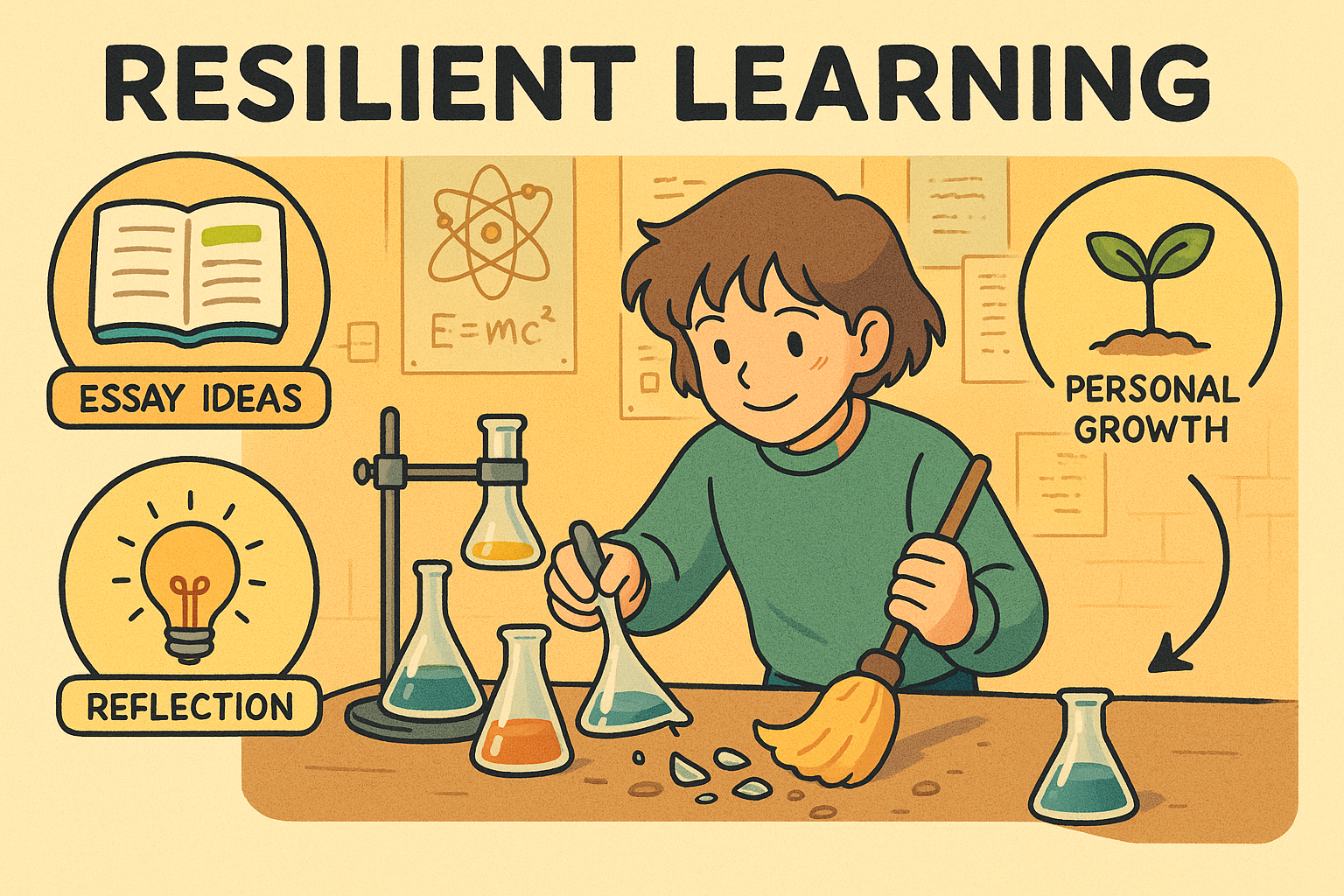
One Harvard-accepted personal statement begins with an unexpected anecdote about failing at a science experiment, then transforms this moment into a reflection on persistence and intellectual curiosity:
"The beaker shattered across the lab floor—along with my confidence. Three months of research, seemingly wasted. But as I swept up the glass, I realized something: the failure itself contained valuable data. My hypothesis was wrong, but now I knew why..."
This opening accomplishes several things at once: it creates an engaging scene, shows vulnerability and authenticity, demonstrates intellectual maturity, and sets up a narrative of growth.
Supplemental Essay Approaches
Harvard's supplemental essays often ask students to elaborate on an extracurricular activity or intellectual interest. The most effective responses typically:
- Provide specific details rather than general statements. They show rather than tell about impact and learning.
- They connect the activity to broader values or goals. And they demonstrate passion without exaggeration.
For even more inspiration, our Best Extracurricular Activities For Ivy League Admissions Success post breaks down specific activities and strategies for supplementals.
According to Harvard's admissions site, "Your intellectual life may extend beyond the academic requirements of your particular school. Please use the space below to list additional intellectual activities that you have not mentioned or detailed elsewhere in your application."
Sample Extracurricular Activities and Achievements
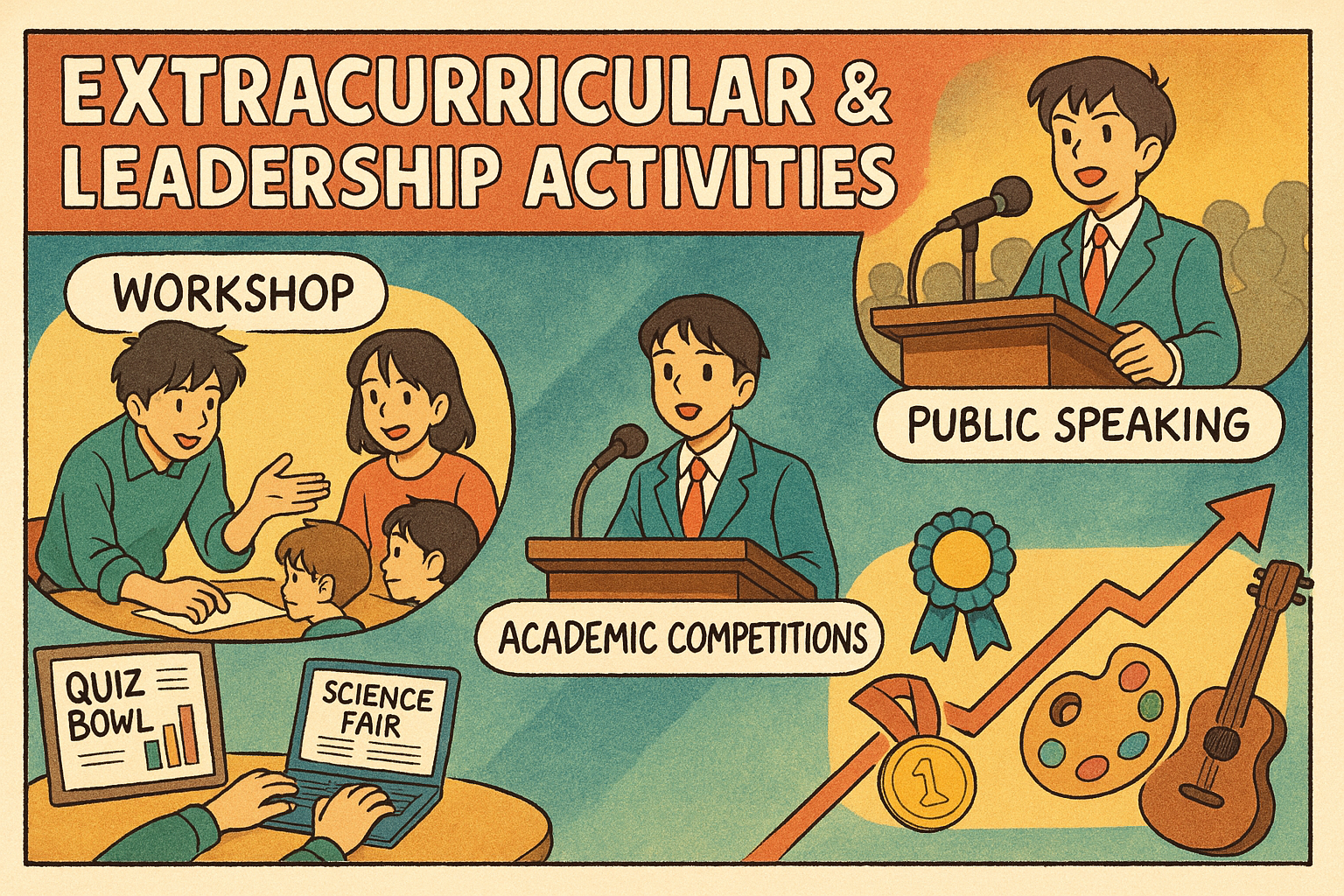
When you look at the activities section of successful applications, one thing becomes crystal clear: quality trumps quantity. Top applicants demonstrate depth, leadership, and meaningful impact rather than a scattered approach to extracurriculars.
For more extracurricular inspiration and actionable ways to stand out, see Unique Extracurricular Activities That Impress Top Universities.
Real applications accepted to top universities frequently feature activities like research (laboratory internships, published papers, or independent projects), leadership (founding organizations, serving as club president, or leading initiatives), community impact (creating programs that address local needs), academic competitions (success in debate, math olympiads, or science competitions), and significant achievements in arts and athletics.
Examining sample extracurricular activities from verified profiles reveals several patterns that make activities stand out:
- Depth of commitment: Multi-year involvement showing progression and growth. Colleges want to see you stick with things, not just sample them.
- Leadership development: Advancing from member to leader, with increasing responsibility. This shows your ability to take initiative and earn the trust of others.
For those seeking more on leadership and its impact on college admissions, check out Leadership Skills That Strengthen Your College Applications for practical ways to showcase development.
- Measurable impact: Specific outcomes like "raised $10,000" or "engaged 500 students." Concrete results speak volumes.
- Initiative: Creating new programs or organizations rather than just participating. This demonstrates entrepreneurial thinking.
- Alignment with interests: Activities that connect to academic or career goals, showing a coherent narrative.
Here's how one successful Harvard applicant described their key activity:
"Founded nonprofit providing STEM workshops to underserved middle schools. Developed curriculum, trained 15 high school volunteers, secured $5,000 in grants. Expanded from 1 to 5 schools over three years, reaching 300+ students annually. 85% of participants reported increased interest in STEM careers."
This description demonstrates leadership, initiative, growth, quantifiable impact, and commitment—all in just a few sentences.
The Common App provides only 150 characters to describe each activity, making concise, impactful descriptions essential. Yale's admissions site notes that "depth and quality of commitment are more important than quantity of activities."
The Value of Admissions Officer Feedback
Admissions officer feedback gives you a rare peek behind the curtain into how applications are actually evaluated. This insider perspective helps demystify the selection process and highlights what truly matters to decision-makers.
Feedback from former or current admissions professionals typically addresses the strengths and weaknesses of essays, how activities are interpreted and valued, the overall impression created by the application, specific elements that made the application memorable, and areas where the application could have been stronger.
For real-life case studies and even more admissions insights, explore College Admission Case Studies That Lead To Real Application Success.
On Examplit, admissions officer feedback accompanies many verified profiles. For example, one Harvard application received this commentary:
"The applicant's essay stood out for its authentic voice and unexpected topic choice. Rather than focusing on a major achievement, they explored a moment of failure and subsequent growth. This demonstrated maturity and self-awareness that many applicants lack. Their research experience was impressive, but it was their ability to articulate what they learned from the process—not just the results—that made their application compelling."
This type of specific feedback helps you understand the nuanced evaluation process beyond simple metrics like GPA or test scores.
When reviewing admissions officer feedback on real college applications, look for recurring themes across multiple applications, qualities consistently praised or criticized, insights about how seemingly minor details influenced decisions, and guidance on authenticity and presentation.
The National Association for College Admission Counseling (NACAC) emphasizes that "holistic review considers the whole person, not just academic metrics," making admissions officer feedback particularly valuable for understanding this comprehensive evaluation approach.
Tips for Using Application Examples Ethically and Effectively
While successful college application examples provide invaluable guidance, they must be used ethically. Harvard accepted essays and verified Common App profiles should inspire rather than be copied.
If you want additional essay-writing support or editing services, our guide on Personal Statement Writing Service Tips For Stronger College Applications will help you write authentically and with confidence.
Follow these principles when studying real college applications:
- Never plagiarize: Copying any portion of another student's essay constitutes academic dishonesty and can result in rescinded admissions offers. It's not worth the risk.
- Seek inspiration, not imitation: Use examples to understand effective structures and approaches, not content. The goal is to learn techniques, not borrow material.
- Focus on principles, not specifics: Identify what makes essays compelling rather than borrowing specific stories or phrases. Look for patterns of excellence.
- Maintain your authentic voice: Your unique perspective is your greatest asset. Don't try to sound like someone else.
To maximize the value of successful college application examples, try these effective learning strategies:
- Analyze structure: Note how essays begin, develop, and conclude
- Identify themes: Recognize recurring qualities like reflection, growth, and authenticity
- Study transitions: See how successful writers connect ideas and paragraphs
- Examine word choice: Notice the balance of formal and conversational language
- Recognize storytelling techniques: Observe how anecdotes and examples support larger points
You're using examples incorrectly if you find yourself copying phrases or sentences, try to tell someone else's story as your own, force your experiences to match those in sample essays, or lose your authentic voice in an attempt to sound like successful applicants.
The Common App explicitly warns against plagiarism, noting that "plagiarized essays will trigger an error message and may result in application rejection." Authenticity remains paramount in the evaluation process.
Additional Ivy League Application Tips
Ivy League application tips derived from successful college application examples and Harvard accepted essays reveal several distinctive patterns worth understanding.
If you're looking for a comprehensive Ivy League admission guide, see Get Into Ivy League With Proven Strategies And Expert Guidance for specific advice on prep, coaching, and maximizing your application.
Elite institutions like Harvard, Yale, and Princeton differ from other selective schools in several ways. They have extreme selectivity with acceptance rates below 5%, meaning even exceptional applicants face steep competition. They look for intellectual vitality demonstrated through passion for learning beyond classroom requirements. They care about institutional fit and alignment with the specific values and culture of each institution. And they have distinctive supplemental essays with unique prompts requiring tailored responses.
Analysis of verified Common App profiles reveals these effective approaches:
- Develop a "spike" rather than being well-rounded: I've noticed the most successful applicants demonstrate exceptional achievement in one area rather than moderate success in many. They show how their primary interest connects to other activities and academic pursuits, creating a coherent narrative.
- Demonstrate institutional fit: You'll want to research each university's specific values and culture, tailor supplemental essays to address why you belong at that particular institution, and connect your goals to unique opportunities at each school.
- Showcase intellectual curiosity: Highlight independent research, reading, or projects. Show how you've pursued learning outside required coursework. Connect classroom concepts to real-world applications.
- Present a coherent narrative: Ensure all application components tell a consistent story. Connect essays, activities, and recommendations around core themes. Help admissions officers understand your journey and trajectory.
Princeton's application supplement specifically asks students to "Please reflect on how you have grown personally and intellectually during your high school years and how you would contribute to the Princeton community"—highlighting their focus on growth, reflection, and community contribution.
Recent data shows Ivy League selectivity has intensified, with Harvard's acceptance rate dropping to 3.4%, Yale's to 4.6%, and Princeton's to 4.0% for the class of 2027.
How to Get Started with Examplit
After studying successful college application examples, you may want to explore more verified Common App profiles and Harvard accepted essays. Examplit provides a structured way to access these valuable resources.
For a step-by-step overview of the full college application journey and planning timelines, consult our College Application Guide For Successful University Admissions to make sure you stay on track from start to finish.
Here's a step-by-step guide to getting started:
- Create an account: Sign up on Examplit's platform to access verified profiles
- Filter by preferences: Search by university, major, extracurricular focus, or demographic factors
- Browse verified profiles: View complete applications, including essays, activities, and academic credentials
- Study admissions officer feedback: Read professional analysis of what made each application successful
- Save favorites: Bookmark profiles that resonate with your interests and goals
- Take structured notes: Record insights and patterns to apply to your own application
To get the most from Examplit's database of real college applications:
- Compare similar profiles: Look at multiple students admitted to your target schools. You'll start to see patterns emerge in what works.
- Focus on your intended major: See how successful applicants in your field presented themselves. Different disciplines often have different expectations.
- Study both essays and activities: Understand how these components work together to create a coherent narrative.
- Review admissions feedback: Pay special attention to professional insights that highlight what really matters.
- Track patterns across schools: Note differences in successful profiles at different institutions. What works for Harvard might differ from what works for Yale.
Examplit was founded by Harvard students who recognized the value of transparency in the admissions process. The platform prioritizes thorough verification with all profiles authenticated through official documentation, privacy protection by removing personal identifying information from all materials, ethical guidelines with clear instructions on how to use examples appropriately, and comprehensive resources with regular updates of new profiles and insights.
The platform's verification process ensures you're studying genuine successful applications rather than fabricated or exaggerated examples.
FAQs Legitimacy Privacy Using Examplit
Are the profiles on Examplit legitimate?
Yes, all successful college application examples on Examplit are verified through a rigorous process. Students provide proof of admission through acceptance letters or portal access, and materials are cross-referenced with official documents. Examplit's verification standards ensure you're studying authentic materials rather than fabricated or exaggerated examples.
How is student privacy protected?
Examplit takes privacy seriously when sharing real college applications. All personally identifiable information is removed from profiles, including names, addresses, and contact details. Students explicitly consent to sharing their anonymized materials, and sensitive information is redacted. This approach balances transparency with privacy protection.
Can I access schools beyond the Ivy League?
Yes, while Harvard accepted essays and other Ivy League materials are popular, Examplit includes verified Common App profiles from a wide range of selective institutions, including Stanford, MIT, UChicago, Duke, and many others. You can filter profiles by institution to focus on your target schools.
How recent are the application examples?
Examplit regularly updates its database with new profiles. Most materials are from recent admission cycles, ensuring they reflect current admissions trends and expectations. Each profile includes the admission year, allowing you to focus on the most recent examples.
Is it ethical to study other students' applications?
Yes, studying successful college application examples is ethical when done properly. The key distinction is between inspiration and plagiarism. Using examples to understand effective approaches is appropriate; copying content is not. Examplit provides clear guidelines on ethical use of their materials.
How do I know which examples are most relevant to me?
Examplit allows you to filter verified profiles by multiple criteria, including target schools, intended major or academic interests, extracurricular focus, demographic factors, and test score ranges. This filtering helps you find the most relevant successful college application examples for your specific situation.
Conclusion & Call to Action
Studying successful college application examples gives you invaluable insights into what elite institutions are really looking for. By examining real college applications—particularly Harvard accepted essays and complete profiles—you gain concrete understanding of the qualities, experiences, and presentation that impress admissions officers.
The patterns revealed across verified Common App profiles show that successful applications combine academic excellence with authentic personal narratives, meaningful extracurricular engagement, and thoughtful reflection. Admissions officer feedback further illuminates the often subtle distinctions that separate accepted applicants from the thousands of qualified students who are declined.
For more success stories and admissions strategies based on real college applicant journeys, visit Success Stories Of Students Who Overcame Challenges To Achieve Their Dreams to stay inspired as you craft your own application.
As you craft your own application, remember that these examples should inspire rather than dictate your approach. Your unique experiences, perspective, and voice remain your greatest assets in the admissions process.
Examplit's database of verified profiles offers an unprecedented resource for ambitious students seeking to understand what excellence looks like in practice. By exploring these materials thoughtfully and ethically, you can develop a stronger, more authentic application that effectively communicates your distinctive qualities and potential.
Take the next step in your college application journey by exploring verified Common App profiles on Examplit. Sign up today to access real, successful applications and gain the insights that could help transform your own application from strong to exceptional.
Remember: The most compelling applications aren't those that imitate others, but those that authentically present each applicant's unique story, potential, and vision for the future.