
Table of Contents
- Understanding Early Decision Deadlines and Commitments
- Early Decision vs Early Action Key Differences
- Analyzing Early Decision Acceptance Rates
- The Binding Nature of College Applications
- Weighing Early Decision Pros and Cons
- Developing Effective Early Decision Strategies
- Financial Aid Implications of Early Decision
- Preparing a Competitive Early Decision Application
- Case Studies Successful Early Decision Applicants
- What to Do After Submitting Your Early Decision Application
Understanding Early Decision Deadlines and Commitments
Let's talk about those early decision deadlines - they typically fall between November 1 and November 15, which is way earlier than regular decision deadlines that stretch into January or February. This accelerated timeline means you'll need to get your application materials ready months before your friends who are going the regular decision route.
What really sets early decision apart is its binding nature. When you apply through early decision, you're essentially making a promise to attend that school if they accept you. This commitment is the fundamental difference between early decision and other application options.
Here's what the typical early decision timeline looks like:
| Stage | Timing |
|---|---|
| Application submission | Usually by November 1-15 |
| Decision notification | Mid-December |
| Enrollment commitment | Within 1-2 weeks of acceptance |
| Financial aid package | Typically released with acceptance |
This speedier process means you'll get your admission decision about a month earlier than early action applicants and several months before regular decision applicants. For many students, this earlier timeline is a huge relief - it cuts down on that agonizing waiting period.
But remember, the binding aspect of early decision applications means you must withdraw all other college applications if you're accepted. This isn't a commitment to take lightly. Backing out of an early decision acceptance without a legitimate reason (like insufficient financial aid) is considered an ethical violation that could potentially harm your academic reputation.
For a broader look at all types of college admissions deadlines and how they compare—including early decision, early action, and regular decision—see our comprehensive guide to college application deadlines.
Understanding Early Decision Deadlines and Commitments
| Stage | Timing |
|---|---|
| Application submission | Usually by November 1-15 |
| Decision notification | Mid-December |
| Enrollment commitment | Within 1-2 weeks of acceptance |
| Financial aid package | Typically released with acceptance |
Timeline and process steps for a typical early decision college application.
Early Decision vs Early Action Key Differences
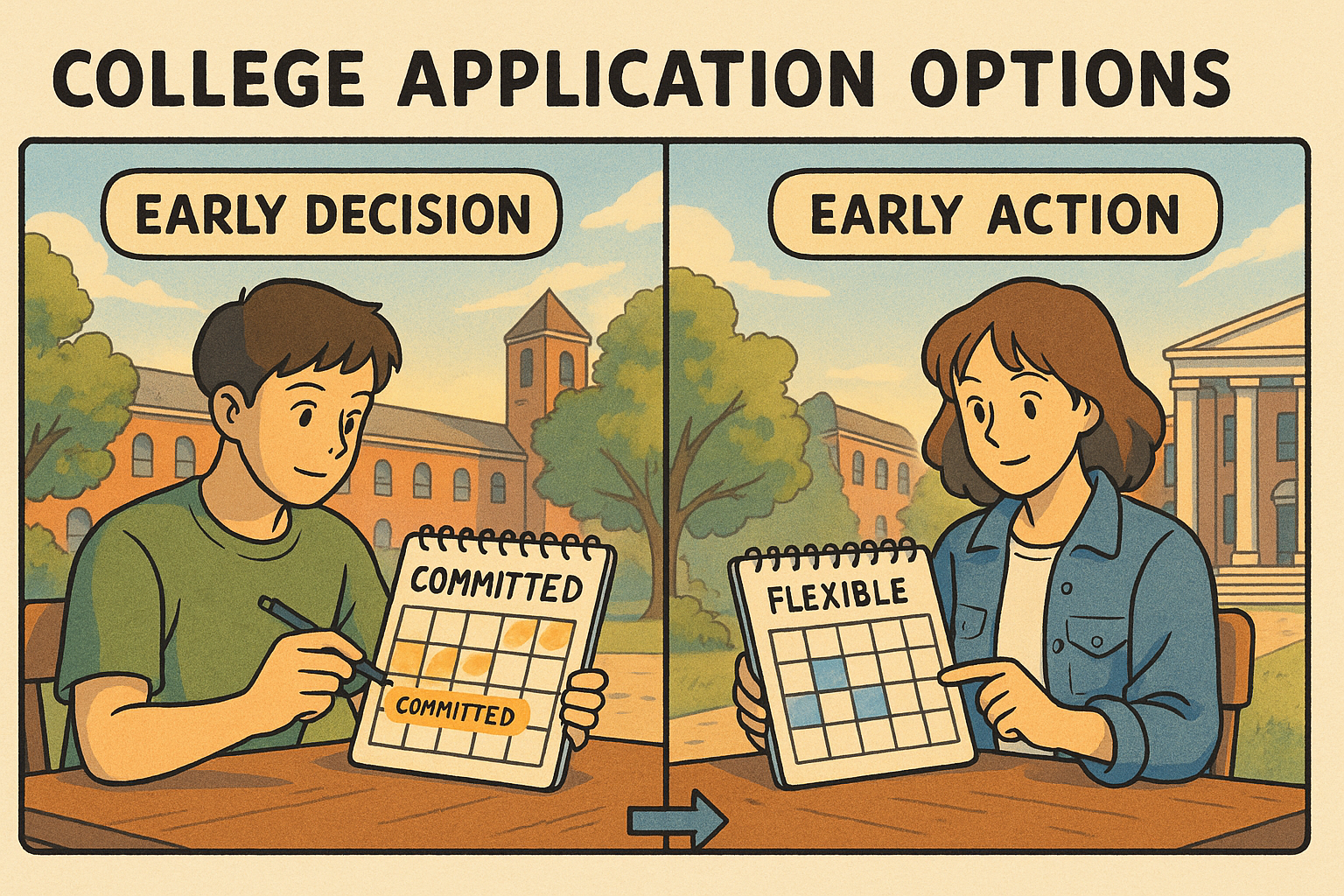
Understanding the distinction between early decision vs early action is super important when you're mapping out your application strategy. While both options let you apply earlier than regular decision, they come with very different terms and commitments.
If you're looking for a full breakdown of each application pathway—from early decision and early action to rolling and regular decision—our College Application Guide walks you through key differences, deadlines, and strategic considerations.
Early Decision
Early Decision comes with some serious strings attached:
| Aspect | Early Decision Details |
|---|---|
| Commitment | Binding - you must attend if accepted |
| Application limit | Typically only one school via early decision |
| Timeline | Applications due early November, decisions by mid-December |
| Financial considerations | You commit before seeing your financial aid package |
| Other applications | Must withdraw all other applications if accepted |
The binding nature of early decision is its defining characteristic. When you apply this way, you're telling the school, "You're my absolute first choice, and I'll definitely attend if accepted."
For tips on maximizing your odds, see proven application strategies from our Ivy League admissions guide.
Early Decision
| Aspect | Early Decision Details |
|---|---|
| Commitment | Binding - you must attend if accepted |
| Application limit | Typically only one school via early decision |
| Timeline | Applications due early November, decisions by mid-December |
| Financial considerations | You commit before seeing your financial aid package |
| Other applications | Must withdraw all other applications if accepted |
Essential differences of Early Decision applications.
Early Action
Early Action offers a much more flexible approach:
| Aspect | Early Action Details |
|---|---|
| Commitment | Non-binding - you can decide by May 1 |
| Application flexibility | Can apply to multiple schools via early action (with some restrictions) |
| Timeline | Applications typically due in November, decisions by mid-December or January |
| Financial considerations | Can compare financial aid packages before deciding |
| Decision freedom | No obligation to attend if accepted |
Some schools offer what's called restrictive or single-choice early action, which limits your ability to apply early to other schools but still doesn't require a binding commitment to attend. Harvard, Yale, Princeton, and Stanford are among the institutions that have used this model.
The biggest advantage of early action? Flexibility. You get the benefit of an early application without giving up your ability to compare offers from multiple institutions. However, early decision might give you an edge in the admissions process by demonstrating stronger commitment to your top-choice school.
When deciding between these options, think about not just how sure you are about your top-choice school but also your financial needs and whether you want to be able to compare offers from different schools.
For students who want to make the most of flexible college application timelines—including combining early action with other options—see our College Application Timeline Guide.
Early Action
| Aspect | Early Action Details |
|---|---|
| Commitment | Non-binding - you can decide by May 1 |
| Application flexibility | Can apply to multiple schools via early action (with some restrictions) |
| Timeline | Applications typically due in November, decisions by mid-December or January |
| Financial considerations | Can compare financial aid packages before deciding |
| Decision freedom | No obligation to attend if accepted |
Differences and advantages of Early Action applications.
Analyzing Early Decision Acceptance Rates
One of the most compelling reasons students consider early decision is the potentially higher early decision acceptance rates compared to regular decision pools. The data consistently shows that early decision applicants are admitted at higher rates across many selective institutions.
For example, recent admissions cycles have shown:
| Institution Type | Early vs. Regular Decision Advantage |
|---|---|
| Ivy League schools | Early decision acceptance rates typically 2-3 times higher |
| Highly selective liberal arts colleges | Often 10-25 percentage points higher for early applicants |
| Top public universities | More modest but still significant advantages |
At some of the most competitive institutions, the difference can be pretty striking. In recent years, Cornell University has had about 25% early decision acceptance rates versus roughly 10% for regular decision. Dartmouth College shows similar patterns with approximately 20% early decision versus 8% regular decision, and Northwestern University comes in at around 25% early decision versus 9% regular decision.
But here's the thing - these statistics need careful interpretation. The higher acceptance rates don't necessarily mean early decision is an easy path to admission. Several factors contribute to this statistical advantage:
- First, there's self-selection at work. Early decision applicants tend to be well-prepared, highly qualified students who've done their research.
- Second, colleges value the commitment shown by early decision applicants - it demonstrates genuine interest.
- Third, schools use early decision to secure a portion of their class and manage yield rates.
- And finally, some schools prioritize legacy applicants and athletes in early rounds.
It's also worth noting that some institutions fill a substantial portion of their incoming class through early decision. Schools like the University of Pennsylvania, Dartmouth, and Northwestern have been known to fill 40-50% of their classes through early decision in recent years.
While these statistics look promising, you should consider them alongside other factors like financial aid needs and how certain you are about your top choice. The binding nature of early decision means this strategy works best if you have a clear first-choice school and don't need to compare financial aid packages.
For more about the latest admissions trends that influence early decision rates at top universities, check out our breakdown on College Admissions Trends for 2025.
Analyzing Early Decision Acceptance Rates
| Institution Type | Early vs. Regular Decision Advantage |
|---|---|
| Ivy League schools | Early decision acceptance rates typically 2-3 times higher |
| Highly selective liberal arts colleges | Often 10-25 percentage points higher for early applicants |
| Top public universities | More modest but still significant advantages |
Comparing acceptance advantages between early and regular applications.
The Binding Nature of College Applications
The binding college applications process of early decision represents one of the most significant commitments you'll make in the college admissions journey. This binding agreement is essentially a formal contract between you and your chosen institution that carries both ethical and practical implications.
When you submit an early decision application, you typically sign an agreement stating that the institution is your first choice, you'll enroll if accepted, you'll withdraw all other applications if admitted, and you understand the binding nature of this commitment. This agreement is usually signed by you, a parent or guardian, and often your high school counselor, creating a three-way commitment that underscores just how serious this is.
While early decision agreements aren't legally binding contracts in the traditional sense, there are several enforcement mechanisms at work. Colleges share information about early decision acceptances with each other. High schools maintain relationships with colleges and typically won't support students breaking commitments. If a college discovers you've broken an early decision agreement, they might rescind your acceptance. And other colleges may be reluctant to accept a student who has broken an early decision commitment elsewhere.
There is one widely accepted exception to this rule: insufficient financial aid. If the financial aid package makes attendance genuinely unaffordable, most institutions will release you from your early decision commitment without penalty.
This exception is crucial because early decision applicants commit before seeing their financial aid package. If you have significant financial need, you should use net price calculators before applying early decision, discuss financial requirements with the financial aid office in advance, and be prepared to demonstrate why the offered aid package is insufficient if needed.
Beyond formal enforcement, the early decision commitment raises ethical considerations. The process is designed on the principle of good faith—that students will honor their commitments and institutions will provide fair consideration and appropriate financial support.
Breaking an early decision commitment without legitimate cause undermines this system and potentially takes an opportunity away from another deserving student who would have honored the commitment.
For these reasons, early decision should only be pursued if you're absolutely certain about your first-choice school, have thoroughly researched the institution, have a realistic understanding of your financial needs and the school's ability to meet them, and are prepared to honor the commitment if accepted.
If you want to understand how the binding nature of other admissions policies (like rolling admission) compares to early decision, visit our Rolling Admission Guide.
Weighing Early Decision Pros and Cons
Making an informed decision about early decision means carefully weighing the early decision pros and cons based on your unique circumstances and priorities. This application strategy offers significant advantages but also comes with important limitations that you should consider.
Let's look at the pros first. Early decision pools typically see higher acceptance rates than regular decision, sometimes dramatically so. This statistical advantage can be particularly valuable at highly selective institutions. Applying early decision sends a clear message to admissions officers about your enthusiasm for their institution, potentially giving your application an edge. You'll receive an admission decision in December rather than March or April, which can significantly reduce stress during your senior year. An early acceptance allows you to focus on preparing for college rather than managing multiple applications throughout senior year. Some schools may offer early admitted students priority for housing, course registration, or special freshman programs. And at schools that fill a large percentage of their class through early decision, applying early puts you in a less crowded applicant pool.
Now for the cons. The most significant drawback is the binding nature of early decision, which eliminates your ability to compare offers from multiple schools. You cannot compare financial aid packages from different institutions, potentially resulting in a less favorable financial outcome. With a binding commitment, you have less leverage to negotiate financial aid packages than students with multiple offers. The earlier deadline means less time to improve standardized test scores, enhance your senior year transcript, or refine your application. If you're not absolutely certain about your top choice, the binding commitment could lead to regret if your preferences change. And most schools only allow you to submit one early decision application, limiting your strategic options.
So who should consider early decision? It may be right for you if you have a clear first-choice school that stands significantly above all others, your academic profile aligns well with the institution's admitted student profile, your family's financial situation allows you to commit without comparing aid packages, you've thoroughly researched the school and are confident in your choice, and you're prepared to complete strong applications by the earlier deadline.
Early decision may not be right for you if you need to compare financial aid packages to make college affordable, you're still deciding between several top choices, your academic profile might strengthen significantly during senior year, you want to see how your interests develop throughout senior year, or you prefer to keep your options open longer.
The decision to apply early should be made thoughtfully, considering both the potential advantages and the significant commitment involved.
For additional strategies on how to craft a college list and manage multiple admissions options (including how to use Early Decision strategically alongside waitlists and rolling admission), read our Waitlist Strategy Tips.
Developing Effective Early Decision Strategies
Creating successful early decision strategies requires thoughtful planning and execution. With the binding nature and earlier timeline of early decision applications, strategic preparation becomes even more crucial for maximizing your chances of admission.
Let's start with a timeline for early decision preparation. In the spring of your junior year, begin researching potential early decision schools, visit campuses when possible, take standardized tests for the first time, and build relationships with teachers who might write recommendations. During the summer before senior year, narrow down your early decision choice, draft your personal statement and supplemental essays, retake standardized tests if needed, and research financial aid options using net price calculators. In the fall of senior year, finalize your early decision choice by early October, complete and polish application materials, request transcripts and letters of recommendation at least 3-4 weeks before deadlines, and submit your application 1-2 weeks before the deadline to avoid technical issues.
When selecting an early decision school, consider these strategic factors: First, assess your admission likelihood by comparing your academic profile with the school's middle 50% range for admitted students. Early decision offers the greatest advantage when your profile is within or slightly below the typical range. Second, maximize your demonstrated interest before applying through campus visits, information sessions, interviews, and thoughtful engagement with admissions representatives. Third, research whether your target school has specific enrollment priorities that might align with your profile. Fourth, consider the early decision fill rate - some institutions fill 40-50% of their class through early decision, making applying early particularly advantageous.
For application enhancement strategies, focus on essays and supplemental questions that specifically address why this institution is your clear first choice. Be concrete and specific about programs, opportunities, and aspects of campus culture that align with your goals and values. Choose recommenders who can speak to qualities valued by your early decision school, and brief them on why you're applying early decision. If offered an interview, prepare thoroughly by researching specific programs and opportunities. Frame your extracurricular activities to highlight qualities valued by your target institution.
Even with early decision's advantages, acceptance isn't guaranteed, so develop a robust backup plan: While focusing on your early decision application, prepare materials for regular decision applications to other schools. Ensure your college list includes appropriate reach, match, and safety schools for regular decision. Consider applying to non-restrictive Early Action schools simultaneously (if permitted by your Early Decision school's policies). Understand the process for appealing financial aid if your package is insufficient, and know your options if you need to be released from your early decision commitment.
By developing a comprehensive early decision strategy that addresses school selection, application enhancement, and contingency planning, you can maximize your chances of admission while ensuring you have appropriate alternatives if needed.
Explore more about the college planning timeline and balancing multiple deadlines with our College Application Timeline Guide.
Financial Aid Implications of Early Decision
Understanding the early decision financial aid implications is crucial before committing to this binding application option. The intersection of early decision and financial aid creates unique considerations that can significantly impact your college financing strategy.
When you apply early decision, you agree to attend before receiving your financial aid package, which creates several important financial considerations. Perhaps the most significant financial drawback is the inability to compare financial aid packages from multiple institutions. This limitation can potentially result in accepting a less generous offer than you might have received elsewhere. Students with multiple offers often use competing financial aid packages to negotiate for improved aid, but early decision applicants lack this leverage since they've already committed to attend. Some institutions offer their most competitive merit scholarships to early applicants, while others distribute merit aid equally across application rounds, so research your target school's approach to merit aid timing. Most institutions use standard formulas for determining need-based aid, so these offers should theoretically be similar across comparable institutions. However, schools vary in their ability to meet demonstrated need.
To make informed financial decisions about early decision, take these preparatory steps: Before applying early decision, use the institution's net price calculator to estimate your expected family contribution and potential financial aid package. These tools, required on all college websites, provide personalized estimates based on your financial information. Have financial conversations early with family members who will contribute to your education. Establish clear boundaries about what is affordable before committing to early decision. Research institutional aid policies - some schools are need-blind and meet full demonstrated need, while others are need-aware or unable to meet full need. Consider outside scholarship timelines, as many private scholarships have application deadlines in the spring of senior year, after early decision commitments are made.
The one universally accepted reason to decline an early decision offer is insufficient financial aid. If you're concerned about affordability, understand the institution's financial aid appeal process before applying. Be prepared to provide detailed information about special financial circumstances that might not be captured in standard financial aid forms. If the offered aid package is insufficient, contact the financial aid office promptly to discuss your situation and the possibility of additional assistance. If an appeal is unsuccessful and the financial aid package makes attendance genuinely unaffordable, institutions will typically release you from your early decision commitment without penalty.
From a financial perspective, early decision may be most appropriate for students from families who can comfortably afford the expected family contribution, students who qualify for significant need-based aid at institutions that meet full demonstrated need, students with strong academic profiles at schools that offer automatic merit scholarships, and students who have thoroughly researched costs and aid policies and are confident in their financial planning.
Early decision requires careful financial consideration. While it offers admissions advantages, these must be weighed against the potential financial implications of committing before receiving and comparing financial aid offers.
For more in-depth information on financial planning for college—including guidance on savings strategies and aid options—visit our College Financial Planning Strategies Guide.
Preparing a Competitive Early Decision Application
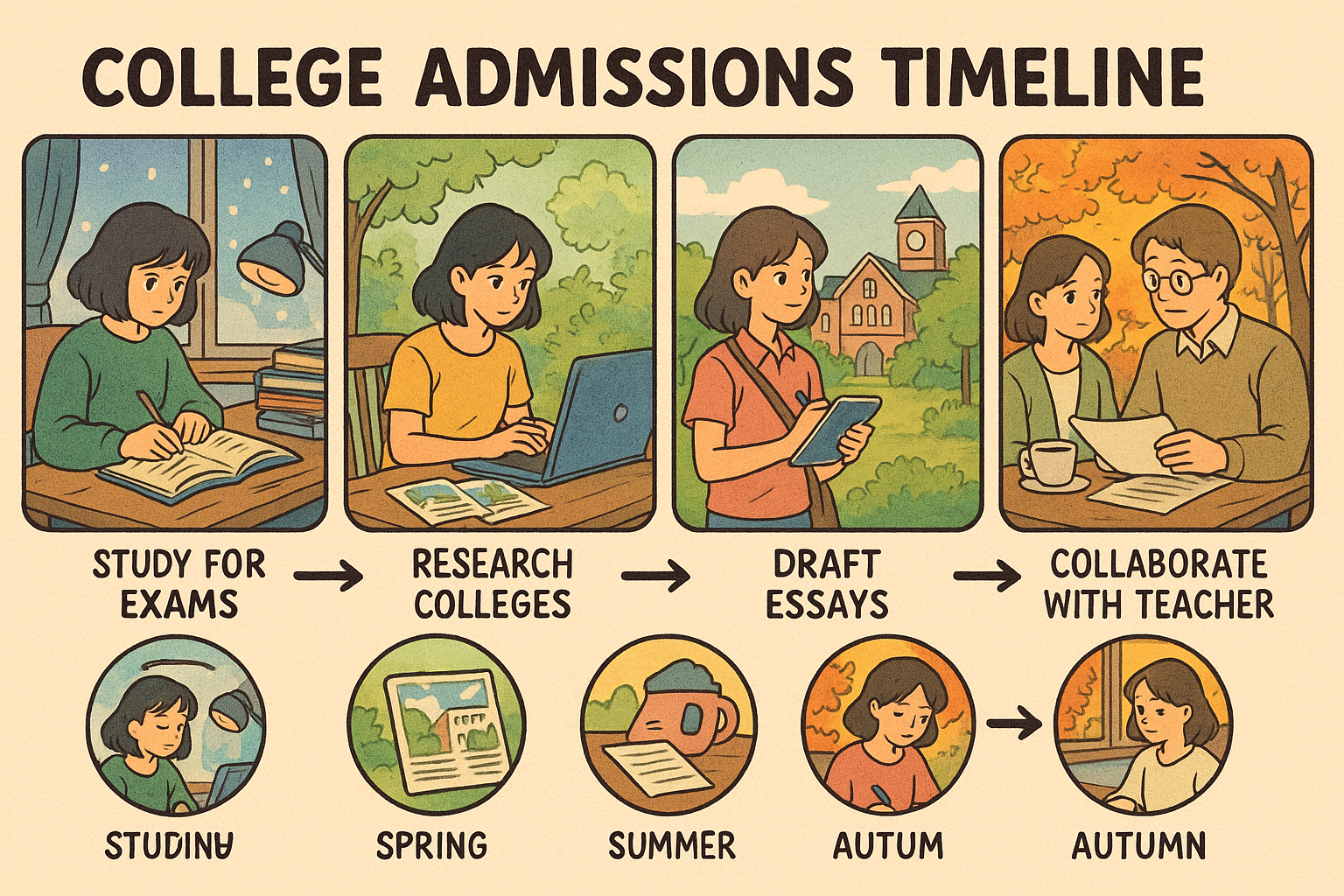
Creating a standout application for the early decision application process requires careful planning and execution. The earlier timeline and higher stakes of early decision make thorough preparation essential for success.
The compressed early decision timeline requires disciplined preparation. During winter and spring of junior year, take standardized tests for the first time, begin researching potential early decision schools, and plan challenging senior year courses that demonstrate academic rigor. In the summer before senior year, visit target campuses if possible, draft your personal statement and begin school-specific essays, prepare for any remaining standardized tests, and research application requirements for your early decision school. In the fall of senior year, finalize your early decision choice and inform recommenders in August/September, complete your application forms and essays in September, review all application materials thoroughly in October, and submit your application in late October/early November (at least several days before the deadline).
This accelerated timeline means you'll need to complete in 2-3 months what regular decision applicants might spread across 4-5 months.
When it comes to application components to prioritize, focus first on essays that demonstrate fit. Early decision essays should clearly articulate why this specific institution is your first choice. Focus on specific programs, professors, or opportunities unique to the institution; how the school's values and culture align with your goals and personality; and concrete examples of how you'll contribute to and benefit from the community.
For strategic recommendation letters, request recommendations from teachers who know you well and can speak to your strengths, teach subjects relevant to your intended major, and can highlight qualities valued by your target institution. Provide recommenders with context about why you're applying early decision and what aspects of your character and achievements might be most relevant.
Present your extracurricular activities strategically by highlighting leadership roles and meaningful impact, demonstrating sustained commitment rather than breadth alone, and connecting activities to your future goals and the opportunities at your target school.
Early decision itself demonstrates interest, but strengthen this by documenting campus visits and information session attendance, engaging thoughtfully with admissions representatives, and showing knowledge of specific programs in your application materials.
Avoid these frequent mistakes that can weaken early decision applications: rushing application materials (the earlier deadline sometimes leads to hastily prepared essays and forms - allow time for multiple revisions and proofreading); generic "why this college" statements (vague or generic explanations for choosing early decision suggest insufficient research and commitment - be specific and authentic); overlooking school-specific requirements (some institutions have unique application components or deadlines for certain programs - research all requirements thoroughly); neglecting regular decision preparations (while focusing on your early decision application, don't neglect preparation for regular decision applications as a contingency plan); and misalignment between application and school values (research your target institution's mission and values to ensure your application emphasizes relevant qualities and experiences).
Before submitting your early decision application, conduct a comprehensive review: verify all personal information and contact details, check that all required forms and supplements are complete, ensure essays address the specific prompts and word limits, confirm all standardized test scores have been sent, verify that transcripts and recommendations have been submitted, review financial aid forms for completeness and accuracy, and save copies of all submitted materials for your records.
If you're looking for practical essay-writing advice to make your application stand out, see our resource on writing a successful college essay that stands out.
Case Studies Successful Early Decision Applicants

Examining real-world examples of successful early decision applications provides valuable insights into effective early decision strategies. While each student's journey is unique, these composite case studies (based on common patterns among successful applicants) illustrate key principles that can guide your own early decision approach.
Let's look at our first case study: The Focused Humanities Student. This student had a 3.8 unweighted GPA, 1480 SAT score, and activities including school newspaper editor, debate team captain, and community theater involvement. They targeted a small liberal arts college known for humanities.
Their strategic approach included identifying their early decision school during junior year after attending a summer program on campus. They demonstrated academic alignment by taking AP Literature, AP History, and an online creative writing course to show preparation for their intended English major. They engaged with the campus beyond the summer program by attending virtual information sessions and interviewing with an alumnus, referencing specific faculty members and courses in their discussions. Their personal statement showcased analytical thinking through a narrative about directing a community theater production, while their supplemental essays specifically addressed how the college's seminar-style classes and writing center aligned with their learning style. They requested letters from their English and History teachers who could speak to their classroom contributions and writing abilities—qualities highly valued at their target school.
The outcome? They were accepted early decision with a merit scholarship. The admissions feedback noted their clear articulation of fit with the institution's teaching philosophy and evidence of sustained engagement with their academic interests.
Our second case study features a STEM Research Enthusiast with a 4.1 weighted GPA, 33 ACT score, and activities including Science Olympiad, a research internship at a local university, and founding a coding club. They built their early decision strategy around their research experiences and technical skills by creating a supplemental portfolio highlighting their research project methodology and results, connecting these experiences to specific research opportunities at their target university. During a campus visit, they arranged a meeting with a professor whose research aligned with their interests and referenced this conversation in their application. Their essays focused on problem-solving persistence, describing how they troubleshot a failed experiment and eventually achieved success—directly connecting this mindset to the collaborative research environment at their target school. While emphasizing STEM strengths, they also highlighted humanities interests through their involvement in science communication initiatives, aligning with the university's emphasis on interdisciplinary thinking.
They were accepted early decision, with the admissions committee specifically noting their demonstrated research experience and clear understanding of how they would utilize the university's specific resources.
Our third case study involves a First-Generation College Student with a 3.7 unweighted GPA, 1380 SAT score, and activities including a part-time job (20 hrs/week), student government, and participation in a first-generation student mentoring program. This student leveraged their unique perspective and demonstrated resilience by clearly explaining their family responsibilities and work commitments, framing these experiences as sources of strength and time management skills. They participated in a free college prep program for first-generation students, which helped them prepare stronger application materials and understand the early decision process. Before applying early decision, they had detailed conversations with the financial aid office and used the net price calculator to ensure the school would be financially feasible. Their essays highlighted how they would contribute to campus through mentoring other first-generation students and bringing diverse perspectives to discussions.
They were accepted early decision with a comprehensive financial aid package, with admissions feedback emphasizing their maturity, clear goals, and potential contributions to the campus community.
Several common elements emerge across these successful early decision cases: All successful applicants clearly articulated specific reasons why the institution matched their academic interests, learning style, and personal values. Successful applicants typically began researching and engaging with their top-choice school well before application season. They selected recommenders who could speak to qualities specifically valued by their target institutions. Before committing to early decision, they had clear understanding of financial requirements and aid possibilities. And while focusing on early decision, they maintained preparation for regular decision applications as a backup plan.
For more real-world insights and successful college application stories that go beyond early decision, check out our collection of College Admission Case Studies.
What to Do After Submitting Your Early Decision Application
The period after submitting your early decision application isn't simply a waiting game. How you manage this time can significantly impact both your admissions outcomes and your overall college preparation.
Let's start with immediate post-submission steps. Within a week of submission, confirm that your application has been received and is complete by checking your application portal for status updates, verifying that all supporting documents have been received, and addressing any missing components promptly. If you achieve significant accomplishments after submission - like new academic honors or awards, significant extracurricular achievements, or improved standardized test scores - contact the admissions office about their process for adding updates to your file. Many schools offer interviews after application submission, so research common interview questions for your specific institution, prepare thoughtful questions about programs and opportunities, practice articulating why this school is your first choice, and schedule your interview promptly if it's applicant-initiated.
Maintaining academic excellence remains crucial. Early decision applicants sometimes experience "senioritis" after submission, but remember that schools review your mid-year grades even after acceptance, early decision offers can be rescinded for significant academic decline, and strong final grades may help with scholarship consideration. If you're taking additional standardized tests, maintain your study schedule, submit improved scores according to the school's policy, and research score reporting deadlines for consideration.
Even with early decision pending, complete your contingency applications by finalizing your regular decision school list, completing application forms and essays, gathering necessary supporting materials, and being ready to submit shortly after early decision notification. Research and track application submission deadlines, financial aid form deadlines, and scholarship application timelines. Continue demonstrated interest activities with backup schools by attending virtual information sessions, responding to outreach from other institutions, and continuing to research programs and opportunities.
Financial aid preparation is essential. Complete all financial aid applications by their deadlines, including the FAFSA (available October 1), CSS Profile (if required by your institution), and institution-specific financial aid forms. Use this time to apply for private scholarships by researching deadlines and requirements, preparing application materials, and submitting applications before deadlines. If financial considerations are important, understand your early decision school's aid appeal process, gather documentation of special financial circumstances, and research typical aid packages at your institution.
Finally, prepare for all possible decision outcomes. If accepted to your early decision school, understand the timeline for enrollment confirmation, research housing application processes and deadlines, plan for orientation and registration timelines, and withdraw other applications promptly. If deferred to the regular decision pool, research your school's deferral statistics, prepare a letter of continued interest, plan updates on new achievements, and consider additional recommendation letters if allowed. If not accepted, have emotionally prepared for this possibility, be ready to submit regular decision applications, reassess your college list for appropriate reach/match/safety balance, and focus on the opportunities at other institutions on your list.
The post-submission period is an active phase of the application process that requires continued engagement, preparation, and strategic planning. By using this time effectively, you position yourself for success regardless of your early decision outcome.
To help plan your next steps and keep deadlines under control, use our College Admissions Timeline Guide.
Frequently Asked Questions
What is the difference between Early Decision I and Early Decision II
If you're developing your overall college application timeline or considering alternatives to Early Decision, consult our comprehensive timeline guide for additional options.
Can I apply to other schools while waiting for my Early Decision result
Our guide to college application deadlines has more on synchronizing your application timing.
What happens if I cant afford to attend after being accepted through Early Decision
For strategies on college affordability and aid options, review our College Financial Planning Guide.
How much does applying Early Decision increase my chances of admission
See our deep dive on admissions trends for 2025 to understand how these rates are shifting.
Can my Early Decision agreement be enforced legally
If you're interested in other types of college admissions agreements, see our section on Rolling Admission policies.
Is it possible to be deferred from Early Decision to Regular Decision
For effective waitlist and deferral strategies, check out our expert waitlist strategy guide.
How should I decide if Early Decision is right for me
If you're crafting your application calendar, our college application timeline guide can help you decide how early decision fits into your overall plan.
What if I change my mind after being accepted through Early Decision
Learn about balancing Early and Regular Decision options with our full application guide.