Table of Contents
- Why College Planning Matters Now More Than Ever
- Freshman Year Building Your Foundation
- Sophomore Year Expanding Horizons
- Junior Year The Critical Year
- Summer Before Senior Year Critical Preparation
- Senior Year Application and Decision Time
- Summer After Senior Year Preparing for College
- Special Considerations in College Planning
- Navigating College Application Deadlines
- Financial Aid and Scholarship Timeline
- College Admissions Calendar Monthly Breakdown for Senior Year
- College Planning Resources
- Conclusion Your College Planning Journey
Why College Planning Matters Now More Than Ever
College applications have surged dramatically in recent years, with the Common Application reporting a whopping 22% increase for the 2020-2021 cycle compared to the previous year. This competitive landscape makes strategic planning more important than ever for students hoping to stand out.
The college admissions process has also grown more complex. Early decision options, changing test policies, and evolving financial aid procedures can overwhelm unprepared students. Having a detailed roadmap helps you navigate these challenges while maximizing your chances of getting into your preferred schools.
Let's break down what you need to do at each stage of high school to stay on track with your college goals.
To further understand how test-optional policies, holistic admissions, and recent trends can shape your college planning strategy, check out our in-depth analysis on college admissions trends in 2025.
Freshman Year Building Your Foundation
Your college journey kicks off the moment you enter high school. While college might seem far away, what you do now creates opportunities later.
Academic Priorities
Challenge yourself with honors or advanced courses if you're ready for them. These classes not only prepare you for college-level work but also show admissions officers you're willing to push yourself. Establish strong study habits right away since your GPA starts counting now. Try different subjects to discover potential college majors and career interests that might excite you.
Extracurricular Development
Join activities that genuinely interest you rather than padding your resume. Quality involvement matters more than quantity. Look for volunteer opportunities in your community that align with your values. Start keeping track of your activities and achievements in a simple document you can update throughout high school.
Initial College Awareness
Attend any college fairs at your school, even if just to get familiar with the concept. Have honest conversations with family members about college expectations and possibilities, including financial considerations. Begin exploring potential career paths that spark your curiosity.
"Students should use freshman year to explore interests and establish strong academic habits," advises college counselors. "This is the time to build a foundation for more targeted college planning in later years."
For high-impact extracurriculars and leadership roles that can boost your profile from the very start, explore our list of best extracurricular activities for Ivy League admissions.
Sophomore Year Expanding Horizons
Sophomore year builds on your freshman foundation while beginning more intentional college exploration.
Academic Growth
Continue challenging yourself with AP or IB courses if they're available and appropriate for your abilities. Maintain or improve your GPA since colleges examine your cumulative performance across all years. Start identifying your academic strengths and connecting them to potential college majors that might be a good fit.
Standardized Test Preparation
Take the PSAT/NMSQT or PreACT for practice without the pressure of official scores. Use these experiences to get comfortable with test formats and question types. Consider which standardized tests might better showcase your abilities—some students perform better on the SAT, others on the ACT.
College Exploration
Start researching different types of colleges to understand the landscape. What's the difference between public and private schools? Large research universities versus small liberal arts colleges? Attend college fairs and information sessions when available. Summer programs on college campuses can give you valuable exposure to college life.
Career Investigation
Arrange to shadow professionals in fields that interest you, even if just for a day. Take career assessment tests to identify potential paths that match your strengths and interests. Try to connect what you're learning in school to real-world applications.
"Sophomore year is ideal for expanding awareness of college options while continuing to build academic credentials," notes education experts. "Students should begin thinking about standardized testing strategies and exploring potential majors."
If you want a clear breakdown of each step in the college application process ahead, don't miss our College Application Guide for Successful University Admissions.
Junior Year The Critical Year
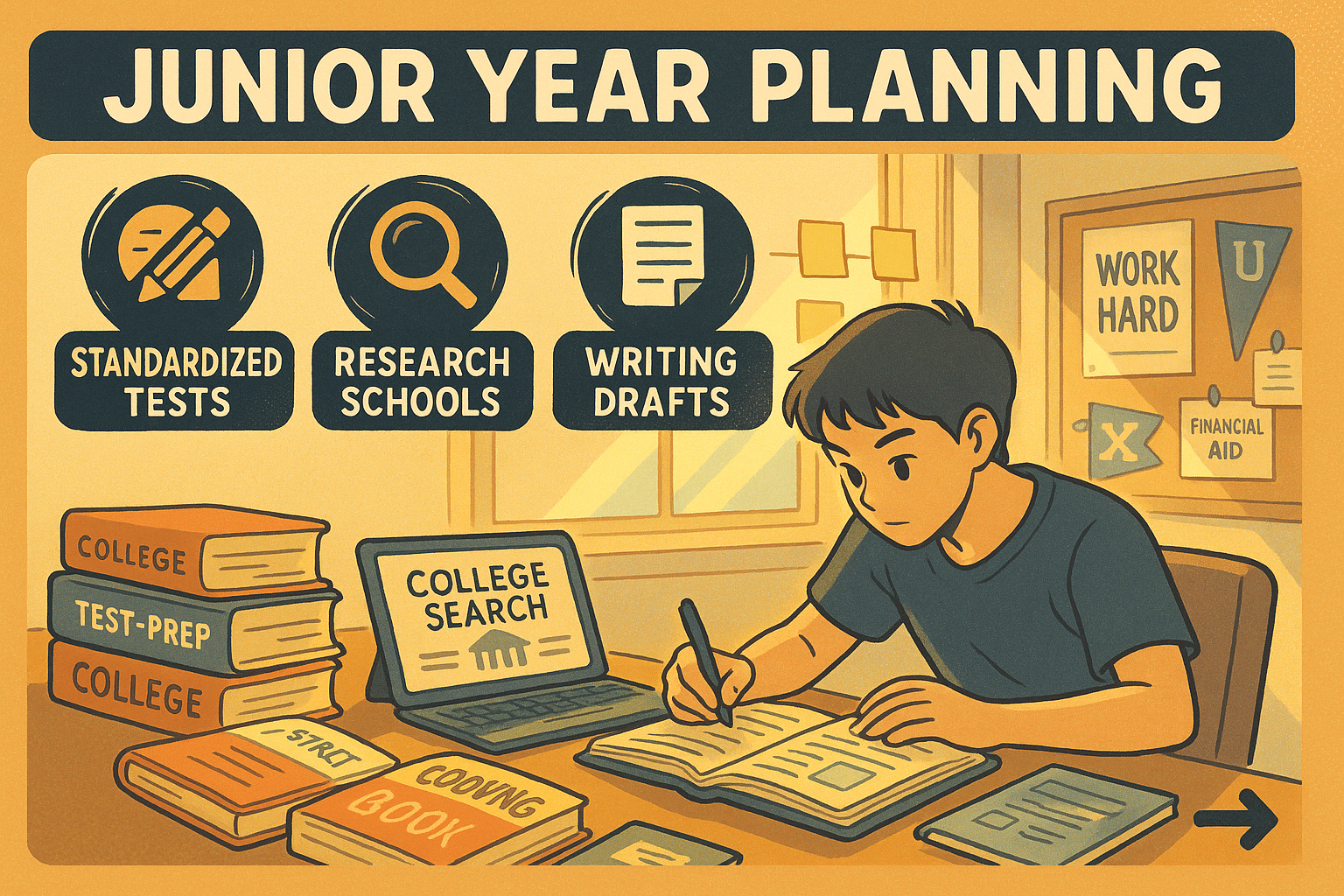
Junior year marks the most important period in your college planning journey. Colleges scrutinize this year closely, and your activities now directly impact your applications.
Fall Semester August to December
Academic Focus
Take the most challenging curriculum you can handle successfully without overwhelming yourself. Your junior year grades carry significant weight since they're the last complete year colleges will see when you apply. Begin identifying teachers who know you well and might write strong recommendation letters for you later.
Testing Timeline
In October or November, take the PSAT/NMSQT, which qualifies juniors for National Merit Scholarships. Research test-optional policies at schools that interest you to determine if you should focus on standardized tests. Create a testing schedule for spring that gives you enough time to prepare properly.
College Research
Develop an initial college list with reach, match, and safety schools based on your academic profile. Research specific admission requirements for schools that interest you. Begin exploring financial aid and scholarship opportunities to understand the financial landscape.
"Junior fall is when college planning shifts from general awareness to specific action steps," explains college admissions experts. "Students should be researching colleges more seriously and preparing for standardized tests."
https://myfuture.com/preparing-for-school/college-planning-timeline/?utm_source=openai
Spring Semester January to May
Standardized Testing
Between March and June, take the SAT or ACT for the first time. Consider SAT Subject Tests if they're required or recommended by your target schools. Plan for potential retakes in summer or fall if you want to improve your scores.
College Visits
Schedule campus visits during spring break if possible. Come prepared with thoughtful questions for admissions officers and current students. Take detailed notes after each visit to help you compare schools later.
Application Preparation
Start drafting your personal statement and college essays. Update your resume with activities, honors, and work experience. Meet with your guidance counselor to review graduation requirements and college plans.
Financial Planning
Research scholarship opportunities that match your profile. Have honest discussions with your family about college costs and financial expectations. Attend financial aid information sessions to understand the process.
"Spring of junior year is when the college application process begins in earnest," notes admissions counselors. "Students should be visiting campuses, taking standardized tests, and beginning to draft application materials."
https://www.niche.com/blog/college-application-timeline?utm_source=openai
Get expert support for crafting your college essays and personal statement with our guide on writing a successful college essay that stands out.
Summer Before Senior Year Critical Preparation
The summer before senior year gives you valuable time to advance your college application process without the pressures of schoolwork.
Application Components
Finalize your college list with a balanced mix of 8-12 schools. Work on refining your application essays and personal statements—these often need multiple drafts. Gather all the information you'll need for applications, including details about your activities, honors, and work experience.
College Visits
Visit additional campuses if possible to narrow down your choices. Attend formal information sessions and tours, but also explore on your own. For your top-choice schools, consider overnight stays to get a better feel for campus life.
Standardized Testing
Retake the SAT or ACT if needed to improve your scores. Complete any required SAT Subject Tests before application deadlines. Send official test scores to colleges that require them, keeping in mind this usually involves a fee.
Financial Aid Preparation
Research scholarship deadlines and requirements, creating a calendar of opportunities. Gather the financial information you'll need for FAFSA and CSS Profile applications. Create a system to track application and financial aid deadlines for each school.
"The summer before senior year is invaluable for college preparation," emphasizes college planning experts. "Without academic pressures, students can focus on finalizing their college list and developing compelling application materials."
https://blog.prepscholar.com/when-to-apply-for-college?utm_source=openai
For an expert timeline of every step to take during this pivotal period, review our College Application Timeline Guide to Planning and Success.
Senior Year Application and Decision Time
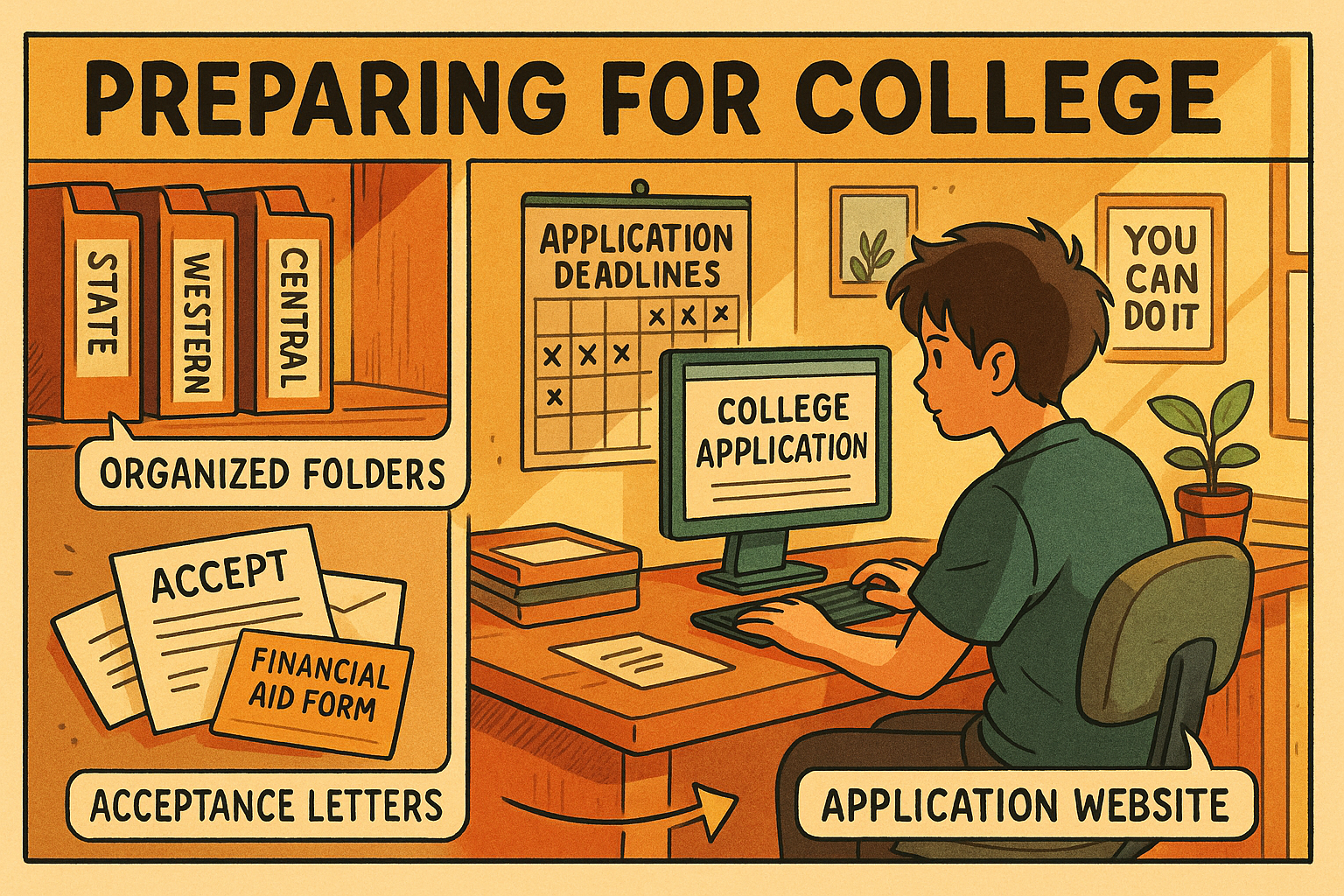
Senior year is when all your preparation culminates in submitting applications and making your final college choice.
Fall Semester August to December
August to September
Finalize your college list with a thoughtful mix of reach, match, and safety schools. Request letters of recommendation from teachers and counselors, giving them plenty of time. Create a detailed calendar of application deadlines for each school. Register for final standardized tests if you're still working to improve scores.
October
Submit your FAFSA as soon as possible after October 1 when it becomes available. Begin submitting early action and early decision applications if you're pursuing these options. Complete the CSS Profile for schools that require this additional financial form. Continue working on regular decision applications while balancing senior year coursework.
November
Most early action and early decision deadlines fall between November 1-15, so submit well before these dates. Submit any remaining standardized test scores to your schools. Continue applying for scholarships—many have fall and winter deadlines. Maintain strong academic performance and avoid senioritis!
December
Many regular decision application deadlines fall between December 1-15. You'll receive early action and early decision results this month. Complete any remaining applications before winter break begins. Request midyear reports to be sent to colleges that require them.
"The fall of senior year requires careful attention to deadlines and details," advises college counselors. "Students should submit applications well before deadlines and continue to maintain strong academic performance."
For a more detailed admissions timeline tailored to your senior year, check out Master the College Admissions Timeline and Secure Your Place at Top Schools.
Spring Semester January to May
January to February
Submit any remaining regular decision applications. Continue applying for scholarships—many have deadlines throughout the year. Complete additional financial aid forms as required by specific schools. Maintain strong grades for midyear reports that will be sent to colleges.
March to April
This is when you'll receive admission decisions from regular decision schools. Compare financial aid packages carefully, looking beyond the total amount to understand the types of aid offered. Revisit top-choice campuses if possible to help make your final decision. Evaluate all options based on academic fit, campus culture, and affordability.
May
May 1 is National College Decision Day—the deadline to commit to a college. Submit your enrollment deposit to your chosen school to secure your spot. Notify other schools of your decision to decline their offers. Complete housing applications and orientation registration for your selected college. Request your final high school transcript be sent to your college.
"The spring of senior year is decision time," notes admissions experts. "Students should carefully evaluate all acceptance offers, considering academic fit, campus culture, and financial aid packages."
https://www.niche.com/blog/college-application-timeline?utm_source=openai
For a deeper dive into crafting successful college applications, including essays and Common App strategies, view Master the College Application Process for Admissions Success.
Summer After Senior Year Preparing for College
The transition from high school to college requires preparation beyond just the application process.
Administrative Tasks
Complete all required health forms and verify you have necessary immunizations. Register for orientation programs, which often have early summer deadlines. Connect with your assigned roommate(s) to coordinate dorm room supplies. Set up your college email and student accounts to receive important information.
Academic Preparation
Complete any summer reading or assignments sent by your college. Review placement test information if your school requires these. Work on practical skills you'll need for college life—time management, cooking basics, and laundry skills can be surprisingly important! Research campus resources and support services so you know where to go for help.
Financial Management
Set up a realistic college budget that accounts for all expenses. Make sure you fully understand your financial aid package and payment deadlines. Explore student banking options, including setting up accounts near campus. Learn about work-study opportunities if these are part of your financial aid package.
"The summer after graduation is about practical preparation for college life," explains education experts. "Students should focus on both administrative requirements and personal readiness for the transition."
Special Considerations in College Planning
Different students have unique circumstances that require specialized planning approaches.
For Student Athletes
Register with the NCAA Eligibility Center during sophomore year if you're considering college athletics. Understand the specific core course requirements needed for athletic eligibility. Create highlight videos and athletic resumes to share with college coaches. Learn NCAA guidelines about when and how coaches can communicate with prospective athletes.
For Arts Students
Start developing portfolios or audition materials early in your high school career. Research the specific requirements for arts programs at your target schools. Consider summer intensives to strengthen your skills and build your artistic resume. Understand the additional application components required, such as portfolios, auditions, or interviews.
For First-Generation College Students
Connect with college access programs in your community that specialize in supporting first-generation students. Seek mentorship from teachers or counselors who understand the unique challenges you face. Take advantage of free resources like College Board's BigFuture program. Look for colleges with strong support programs specifically designed for first-generation students.
For Transfer Students
Research articulation agreements between your current institution and potential transfer destinations. Understand exactly which credits will transfer to avoid repeating coursework. Maintain strong grades at your current institution since transfer admissions often emphasize college performance. Connect with transfer admissions counselors early to understand specific requirements.
"Different paths to college require specialized planning," notes education experts. "Students should research requirements specific to their situation and seek appropriate guidance."
If you are interested in the transfer process, explore our comprehensive Transfer Application Success Guide for Undergraduate And Graduate Admissions.
Financial Aid and Scholarship Timeline
Financial planning is a critical component of the college admissions process that should run parallel to your application strategy.
Use the following timeline to stay on track with both financial aid and scholarship applications.
Financial Aid and Scholarship Timeline
| Timeline | Financial Aid Tasks | Scholarship Tasks |
|---|---|---|
| Junior Year Spring | Research financial aid policies at potential colleges | Begin searching for scholarships |
| Use net price calculators to estimate costs | Understand need-based vs. merit-based aid | |
| Summer Before Senior Year | Create accounts for FAFSA and CSS Profile | Research school-specific financial aid deadlines |
| Gather financial documents for aid applications | Continue applying for scholarships | |
| Senior Year Fall | Submit FAFSA as soon as possible after October 1 | Apply for institutional scholarships |
| Complete CSS Profile for schools that require it | Continue external scholarship applications | |
| Senior Year Winter/Spring | Review Student Aid Reports (SAR) from FAFSA | Compare financial aid packages |
| Appeal financial aid offers if circumstances warrant | Make final college choice with financial considerations |
A timeline of key financial aid and scholarship tasks across high school.
College Admissions Calendar Monthly Breakdown for Senior Year
A month-by-month approach helps seniors manage the complex college application process more effectively.
Use this breakdown for senior year to keep on top of all major deadlines and tasks.
College Admissions Calendar Monthly Breakdown for Senior Year
| Month | Application Tasks | Financial Aid Tasks | Testing & Academic Tasks |
|---|---|---|---|
| August | Finalize college list | Research scholarships | Register for fall standardized tests |
| Create application accounts | Begin drafting personal statements | ||
| September | Request recommendation letters | Research scholarship opportunities | Work on application essays |
| Prepare for October tests | |||
| October | Submit early applications | Submit FAFSA (available October 1) | Take standardized tests |
| Complete CSS Profile if required | Continue scholarship applications | ||
| November | Submit early action/decision applications | Continue scholarship applications | Follow up on recommendation letters |
| Work on regular decision applications | Prepare for remaining tests | ||
| December | Submit regular decision applications | Request midyear reports | |
| Receive early application results | Complete remaining applications | ||
| January | Submit remaining applications | Continue scholarship applications | Maintain strong academic performance |
| Follow up on application materials | |||
| February | Check application status | Continue scholarship applications | Prepare for potential interviews |
| Submit additional financial information if requested | |||
| March | Receive regular decision results | Compare financial aid packages | Visit or revisit top-choice schools |
| Research housing options | |||
| April | Make final comparisons | Negotiate financial aid if needed | Attend admitted student events |
| Make final decision | |||
| May | Submit enrollment deposit by May 1 | Complete housing applications | |
| Notify other schools of your decision | Request final transcript |
A month-by-month schedule of key application, testing, and financial aid tasks for seniors.
College Planning Resources
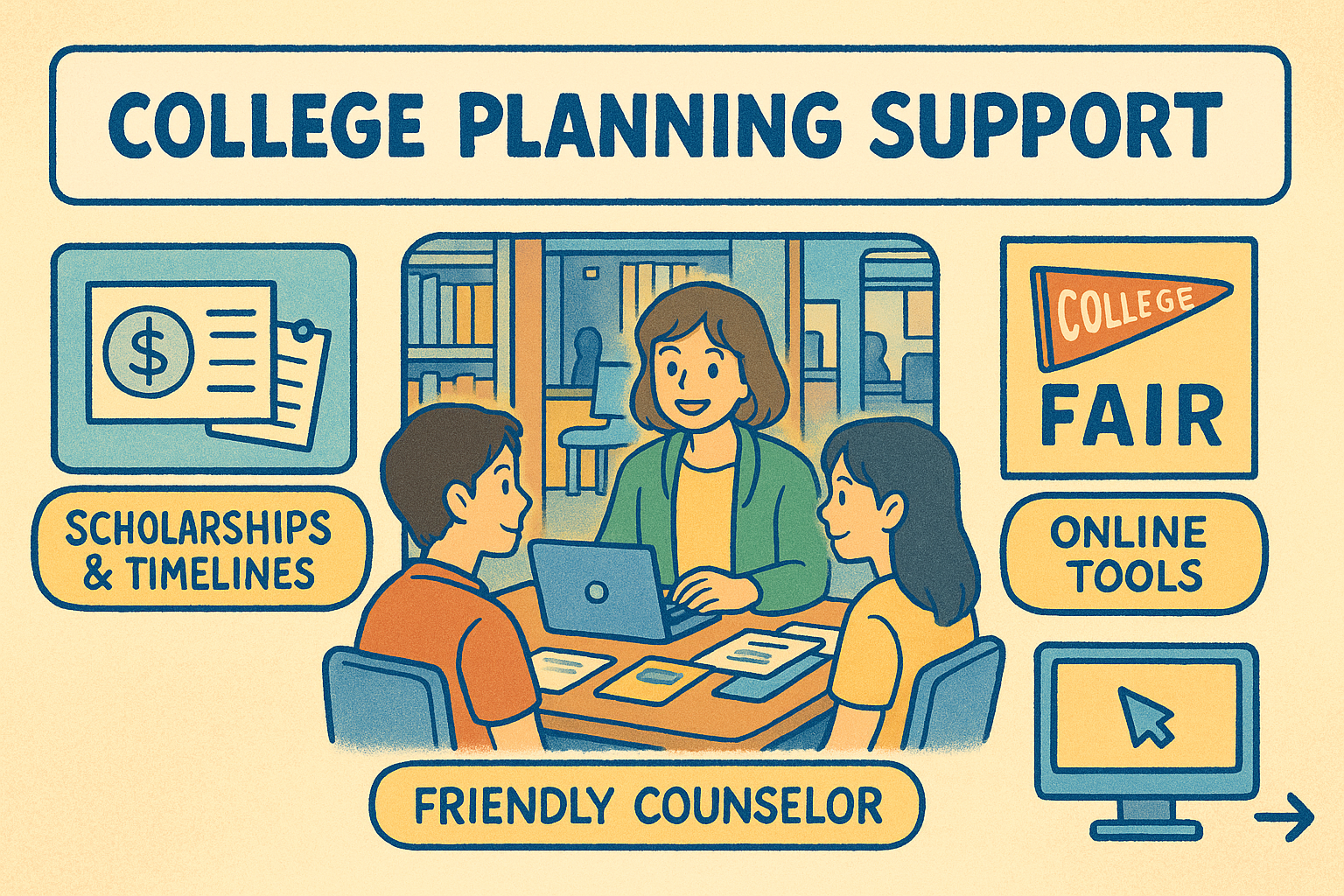
Numerous resources can support your college planning journey, many of them free or low-cost.
School Resources
Your high school guidance counselors are invaluable resources who understand the college process and often have relationships with college admissions officers. Take advantage of college and career centers at your school, which typically offer resources like college guides and application help. Don't overlook teacher mentors who can provide subject-specific advice about college programs. Attend school college fairs and information sessions to meet representatives from various institutions.
Online Tools
College Board's BigFuture offers comprehensive planning tools, college search features, and scholarship information. The Common Application and Coalition Application websites provide resources beyond just the application platforms. FAFSA and CSS Profile websites offer guides to completing these crucial financial aid forms. College search platforms like Niche and College Navigator let you filter schools by various criteria important to you.
Community Resources
Your public library likely offers college planning workshops and resources. Look for community-based college access programs that provide mentoring and application assistance. Attend local college fairs that bring multiple institutions together in one place. Connect with alumni networks from potential colleges to get insider perspectives.
College-Provided Resources
Don't hesitate to contact admissions counselors at your target schools with specific questions. Take advantage of virtual and in-person campus tours to get a feel for different environments. Attend information sessions and webinars offered by colleges to learn about their programs. Financial aid counselors at colleges can provide guidance specific to their institution's policies.
"Utilizing available resources can significantly enhance the college planning process," advises education experts. "Students should take advantage of both school-based and online resources throughout their college journey."
https://myfuture.com/preparing-for-school/college-planning-timeline/?utm_source=openai
If you need a comprehensive checklist of every step, essay, and document for applications, visit our college application timeline 2025–2026 guide.
Conclusion Your College Planning Journey
The college application process represents a significant milestone in your educational journey. By following this comprehensive planning calendar, you can navigate the complex admissions landscape with confidence and purpose.
Remember that while timelines provide structure, your college journey is uniquely yours. You'll need to adapt this calendar to your specific circumstances, goals, and needs. Starting early gives you more options and reduces last-minute stress.
The college admissions process isn't just about getting into schools—it's about finding the right educational environment where you can thrive academically, socially, and personally. Use this planning time to reflect on what you truly want from your college experience.
With careful planning, thoughtful research, and attention to deadlines, you can approach the college admissions process strategically. The right college for you isn't necessarily the most prestigious one, but the one that best fits your educational goals, learning style, and personal preferences.
Your future begins with the plans you make today. By staying organized and proactive throughout high school, you'll be well-positioned to make informed decisions about your higher education journey.