
Table of Contents
- Freshman & Sophomore Years Building Your Foundation
- Junior Year The Critical Planning Phase
- Senior Year Application Season
- Special Considerations in the College Application Process
- Creating Your Personalized College Application Timeline
- Managing Application Stress
- Financial Aid Timeline
- College Application Checklist
Freshman & Sophomore Years Building Your Foundation
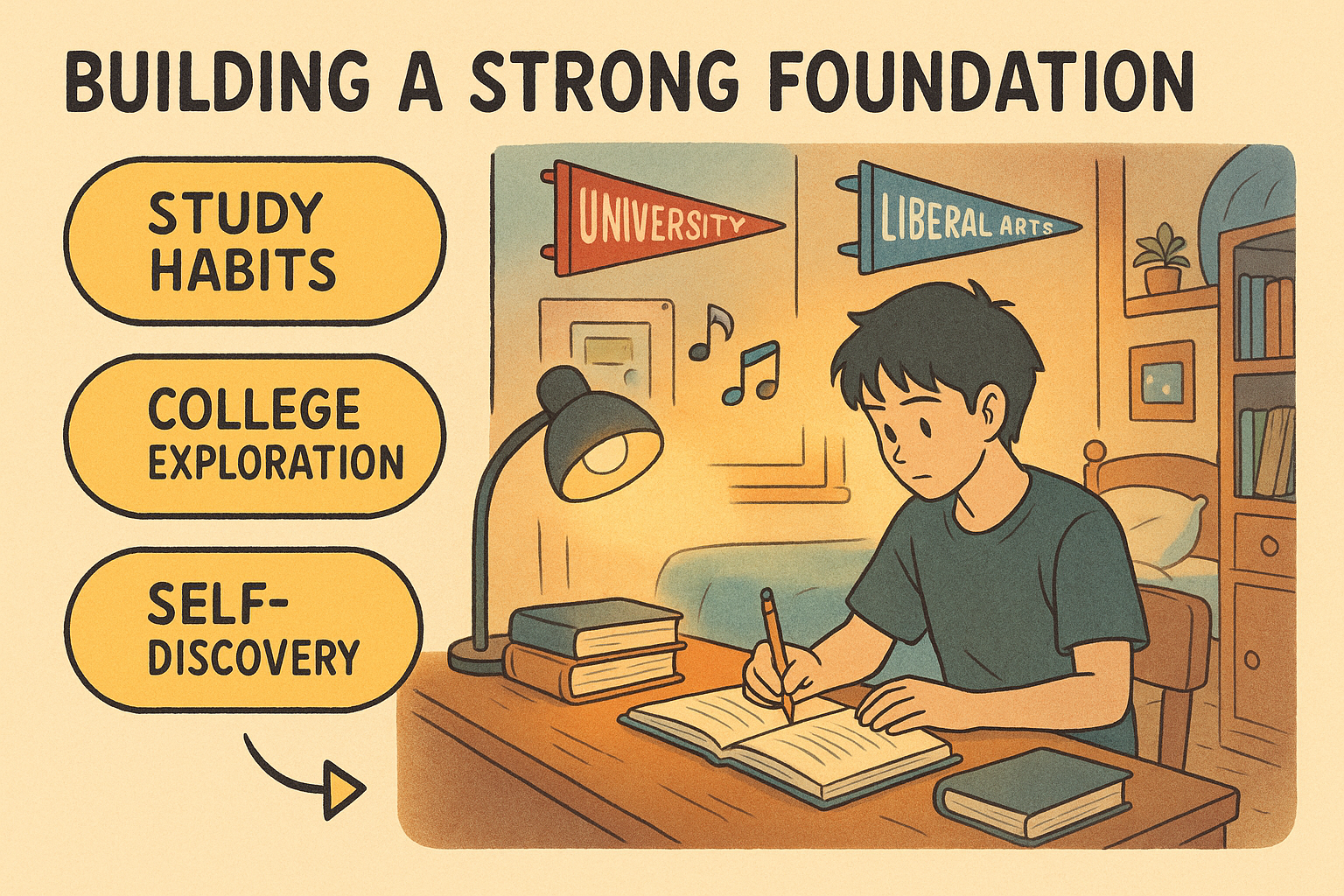
The college application journey kicks off way earlier than most students realize. These first two years of high school are perfect for exploring your interests and laying down a solid academic foundation.
During freshman year, you'll want to focus on developing strong study habits that'll carry you through high school, challenging yourself with appropriate courses, and dipping your toes into different extracurricular activities to find what really lights you up. It's also a great time to start learning about different college types – big vs. small, public vs. private – to get a feel for what might suit you best.
I know college seems ages away when you're just starting high school, but those freshman grades will show up on transcripts colleges see later. Use this time to adjust to high school life and build good academic habits without the pressure of immediate college applications.
As you move into sophomore year, it's time to build on that foundation. Keep taking challenging courses that show academic growth and start preparing for the PSAT as practice for future standardized tests. This is also when you should deepen your involvement in activities where you're showing real interest or talent. Many students find attending college fairs during sophomore year eye-opening – you'll start getting a better sense of specific schools that might interest you. And don't forget to consider summer programs aligned with your interests!
College planning experts often note that "Students should use sophomore year to explore their interests and begin thinking about what they might want to study in college. This exploration helps inform later decisions about which colleges to apply to."
https://myfuture.com/preparing-for-school/college-planning-timeline/?utm_source=openai
Junior Year The Critical Planning Phase
Junior year marks a real turning point in your college application journey. This is when your planning calendar needs to get more detailed and action-focused. For a more in-depth breakdown of how to structure your timeline and set realistic goals, check out our step by step college application timeline guide.
Fall Semester
The fall of junior year moves quickly. You'll take the PSAT/NMSQT in October, which isn't just practice – it can qualify you for National Merit Scholarships. Schedule a meeting with your guidance counselor to make sure you're on track with college prep courses. Now's also the time to get more serious about researching colleges by thinking about factors like location, size, majors, and campus culture.
Start creating a preliminary college list with reach, target, and safety schools. And don't forget to plan your standardized test dates for spring SAT/ACT testing. Trust me, planning these dates early helps tremendously with managing test prep alongside your regular schoolwork. Planning the right college admissions timeline can help you get ahead on these important steps.
Spring Semester
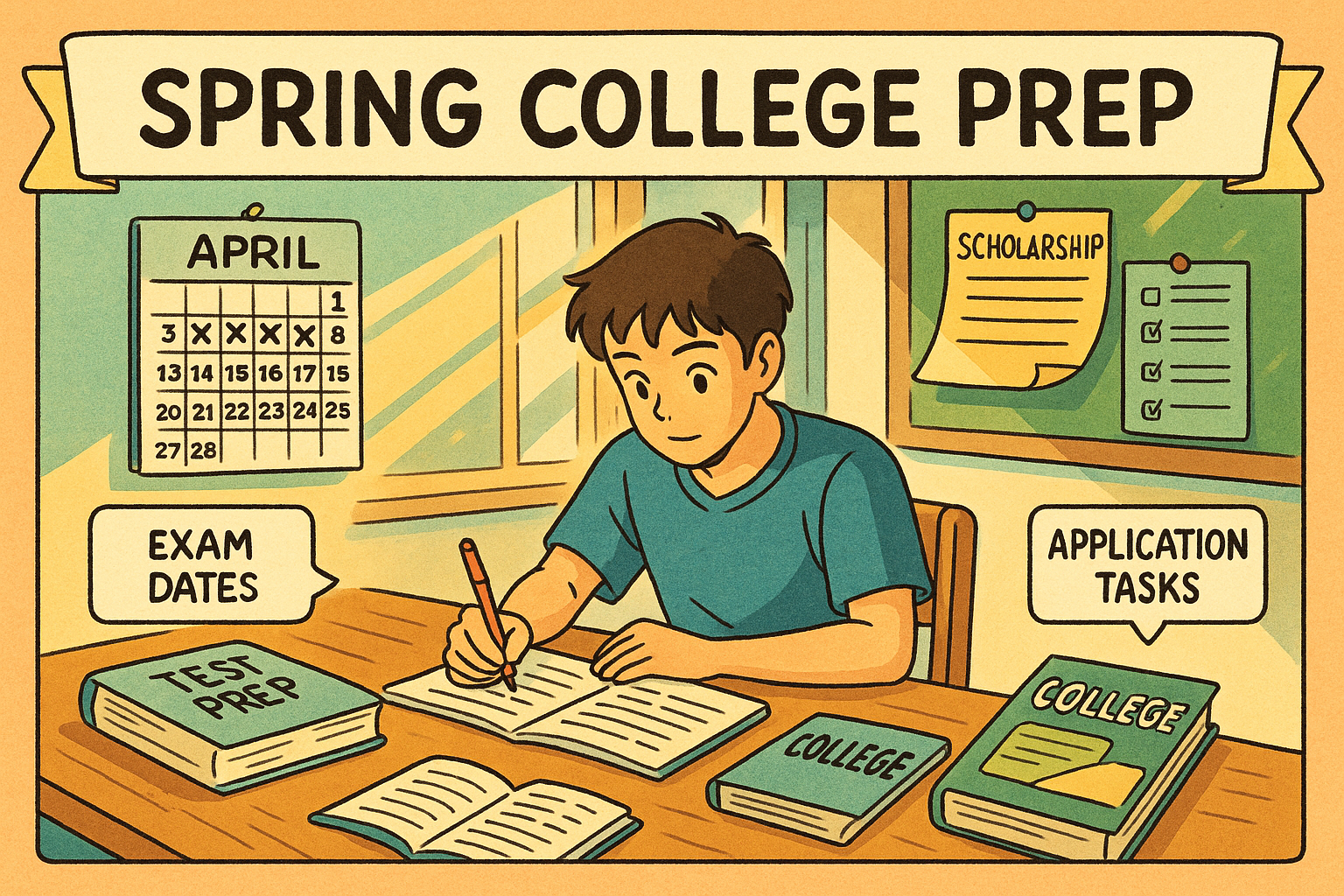
Spring semester of junior year gets busy! You'll take the SAT or ACT at least once (many students test both in spring of junior year and again in fall of senior year). If possible, use spring break to visit some college campuses – there's nothing like walking around a campus to get a feel for whether it might be right for you.
This is also a good time to start researching scholarship opportunities and to request recommendation letters from teachers who know you well. And don't put off starting drafts of your personal statement and common application essays – getting an early start on these will save you tons of stress senior year. For tailored advice on personal statements and application essays, see our guide on writing successful college essays.
College admissions experts often point out that "Junior year is when the college application process really kicks into high gear. The spring semester is particularly important for standardized testing and beginning to narrow down your college list."
Summer Before Senior Year Gaining Momentum
The summer between junior and senior year is absolutely crucial in the college application schedule. Without schoolwork competing for your attention, you can make serious progress on applications.
You should finalize your college list with about 6-10 schools across reach, match, and safety categories. Visit additional campuses if you can, and complete a solid draft of your personal statement – then get feedback from teachers or counselors who can help you refine it. For more personal statement support, visit our personal statement examples and structure tips.
This is also the perfect time to organize all your application materials including transcripts, test scores, and your activities list. Research the specific requirements for each school on your list (they can vary quite a bit!), and create a detailed application calendar with all deadlines clearly marked.
You know what? This summer is your golden opportunity to work on applications without the pressure of classes and homework. Use it wisely to get ahead on all those college application steps waiting for you in the fall. For a comprehensive planning resource, don’t miss our detailed college application guide.
Senior Year Application Season
Senior year is when all your preparation comes together. This is definitely the most deadline-intensive period of the entire college application process.
For expert advice on navigating admissions deadlines and decisions in your senior year, read our master the college admissions timeline guide.
SeptemberOctober Early Applications
As senior year begins, you'll need to finalize your college list with a good mix of safety, target, and reach schools. Complete and submit the FAFSA (Free Application for Federal Student Aid) as soon as possible after October 1 – earlier submission can sometimes mean better aid packages.
Don't forget to request that your official test scores be sent to your colleges, secure those final recommendation letters from teachers and counselors, and complete any Early Decision or Early Action applications, which typically have November 1-15 deadlines. While juggling all this, you'll also need to continue working on your Regular Decision applications.
"Early Decision applications are binding, meaning you commit to attend if accepted, while Early Action allows you to apply early without that commitment. Both options demonstrate strong interest to colleges and can improve admission chances at some institutions." To learn more about early application options and strategies, refer to our comprehensive college application guide.
NovemberDecember Regular Decision Push
November and December are all about submitting those remaining applications for Regular Decision deadlines (typically January 1-15). You'll need to complete any supplemental essays required by specific colleges – and trust me, these can be numerous and time-consuming! To ensure your application essays shine, don’t miss our successful college essay writing tips.
Follow up on recommendation letters and transcripts to make sure they've been submitted, apply for scholarships with winter deadlines, and regularly check your application portals to confirm all materials have been received.
I've seen so many students underestimate just how time-consuming application completion can be. Each school might have unique essay prompts and requirements, so starting early and working steadily through your list is absolutely essential.
JanuaryMarch Financial Aid Focus
From January through March, you'll submit any remaining applications for colleges with later deadlines, complete additional scholarship applications, and submit mid-year grade reports if required by your colleges. Be ready to respond to any requests for additional information from admissions offices, and prepare for potential interviews with alumni or admissions representatives.
This period often feels like a waiting game, but staying engaged with the process and responding promptly to any college communications is super important. And while you're waiting, focusing on scholarship applications can really pay off! For financial planning and aid strategies, see our college financial planning strategies guide.
April Decision Time
April is when it all comes together! You'll receive admissions decisions from Regular Decision schools and need to carefully compare financial aid packages. If you're still torn between options, consider revisiting top-choice campuses or attending admitted student events to learn more about the schools.
Take time to evaluate all your options based on academic fit, financial considerations, and personal preferences. This is a big decision, and it deserves thoughtful consideration. If you want even more tips on handling this critical period, explore our college application timeline for a successful admissions journey.
"When comparing financial aid packages, look beyond the total amount to understand what portion is grants versus loans, and consider the long-term implications of different financing options."
https://myfuture.com/preparing-for-school/college-planning-timeline/?utm_source=openai
May Commitment and Beyond
By May, it's time to make your final decision! You'll submit your enrollment deposit to your chosen school by May 1 (National College Decision Day) and notify other colleges of your decision to decline their offers. Then you'll complete housing applications and other enrollment requirements, send final transcripts to your chosen college, and attend orientation programs during summer.
Congratulations! After years of preparation, you've successfully navigated the college application process and are ready for the next chapter of your educational journey. It's been a long road, but all that hard work has paid off!
Special Considerations in the College Application Process
While the standard timeline works for many students, there are several special circumstances that might affect your college application journey. You can also read more about unique college admissions trends and new acceptance pathways in our article on college admissions trends for 2025.
Rolling Admissions
Not all colleges stick to the traditional timeline with fixed deadlines. Some institutions offer rolling admissions, reviewing applications as they arrive and making decisions throughout the application period.
Rolling admissions offers several benefits: flexibility in when you apply, faster decision notifications (often within 4-8 weeks of submission), and potentially reduced competition for those who apply early in the cycle. For a full breakdown of strategies and key tips for this process, see our Rolling Admission Guide and our detailed article on the benefits of rolling admissions.
If you're looking at schools with rolling admissions, I'd still recommend applying early, as spots fill throughout the cycle and applying later might mean fewer available spaces. You can also explore this process further in our rolling admissions explained guide.
https://en.wikipedia.org/wiki/Rolling_admission?utm_source=openai
TestOptional Policies
The landscape of standardized testing requirements has changed dramatically in recent years, with many colleges adopting test-optional policies. When planning your applications, research each school's testing policy carefully and consider taking standardized tests anyway if you believe you'll perform well.
If you choose not to submit scores, focus on strengthening other application components like essays and activities. Just remember that "test-optional" doesn't mean "test-blind" – strong scores can still enhance your application at most institutions. To stay updated on the latest test-optional policies, read our college admissions trends analysis.
Transfer Students
If you're applying as a transfer student, your timeline will differ significantly from first-year applicants. Application deadlines are typically later (often March-June for fall enrollment), credit evaluation becomes a crucial part of the process, essay prompts will focus on your college experience thus far, and financial aid considerations may vary for transfer students.
The transfer application process requires careful planning to ensure a smooth transition between institutions. For a complete guide to transfer admissions, see our transfer application success guide.
Creating Your Personalized College Application Timeline
While this guide provides a general framework, customizing your college admissions timeline based on your specific circumstances is essential for success. For more step-by-step guidance and essential checklists, see our college application guide for successful university admissions.
Start by creating a master calendar marking all standard deadlines, then add school-specific dates for each college on your list. Build in buffer time before deadlines to account for unexpected delays – you'll thank yourself later when life inevitably throws curveballs your way. Set personal milestone deadlines for drafting essays, requesting recommendations, and other key tasks. And don't forget to schedule regular check-ins with your guidance counselor to stay on track.
"The most successful applicants are those who create and follow a personalized timeline that accounts for their unique circumstances and goals," advise college planning experts.
Creating Your Personalized College Application Timeline
| Timeline Phase | Key Activities | Typical Deadlines |
|---|---|---|
| Early Planning (9-10th grade) | Academic foundation, activity exploration | Ongoing |
| Junior Year | Testing, college research, essay drafting | PSAT: October<br>SAT/ACT: Spring |
| Senior Fall | Applications, FAFSA, recommendations | Early apps: Nov 1-15<br>FAFSA: After Oct 1 |
| Senior Winter/Spring | Regular apps, financial aid, decisions | Regular apps: Jan 1-15<br>Decision Day: May 1 |
A table outlining the major phases in the college application timeline with corresponding key activities and deadlines.
Managing Application Stress
Let's be real – the college application process can be emotionally draining. But there are ways to manage stress while staying on schedule. If you want to make your journey less overwhelming, check out time management and stress-reduction tips in our college application process master guide.
Break those large tasks into smaller steps so you don't feel overwhelmed. Celebrate small victories along the way (finishing an essay, submitting an application) – these moments deserve recognition! Try to maintain perspective about the many paths to success; there are multiple colleges where you can thrive. Build in self-care activities throughout the process, whether that's exercise, time with friends, or whatever helps you recharge. And communicate openly with parents and counselors about challenges you're facing.
Remember that the college application process is a marathon, not a sprint. Pacing yourself according to your timeline will help you produce your best work while protecting your mental health.
Managing Application Stress
| Common Stressors | Coping Strategies |
|---|---|
| Essay writing pressure | Start early, break into smaller tasks, seek feedback |
| Test anxiety | Practice tests, relaxation techniques, consider test-optional schools |
| Decision uncertainty | Campus visits, alumni conversations, honest self-reflection |
| Financial concerns | Early FAFSA completion, scholarship research, net price calculator use |
This table lists common college admissions stressors and effective coping strategies.
Financial Aid Timeline
Financial considerations are a crucial part of the college planning process. Here's a specific timeline to help you navigate the financial aid landscape:
From October through December of senior year, complete the FAFSA as soon as possible after October 1, submit the CSS Profile if required by your colleges (typically for private institutions), research and apply for scholarships with winter deadlines, and estimate college costs using net price calculators. If you are applying to schools that require the CSS Profile, get in-depth advice from our CSS Profile Application Guide.
Between January and March, be ready to submit additional financial information if requested by colleges, apply for local scholarships which often have spring deadlines, and watch for your Student Aid Report (SAR) from your FAFSA submission. For more on keeping college affordable, see our college financial planning strategies.
By April, you'll need to compare financial aid award letters from different institutions, consider appealing aid offers if your financial situation has changed, and calculate your true cost of attendance beyond just tuition.
"Understanding the financial aid timeline is just as important as knowing application deadlines. Missing financial aid deadlines can significantly impact your college affordability."
https://myfuture.com/preparing-for-school/college-planning-timeline/?utm_source=openai
Financial Aid Timeline
| Financial Aid Task | Timeline | Notes |
|---|---|---|
| FAFSA Submission | October 1 - Priority deadlines vary | Earlier submission often means better aid packages |
| CSS Profile | October 1 - Varies by school | Required by many private colleges |
| Institutional Scholarships | Varies widely | Often share application deadlines with admissions |
| External Scholarships | Year-round, peaks Jan-April | Local scholarships often have spring deadlines |
A table of key financial aid tasks, their recommended timeline, and important notes.
College Application Checklist
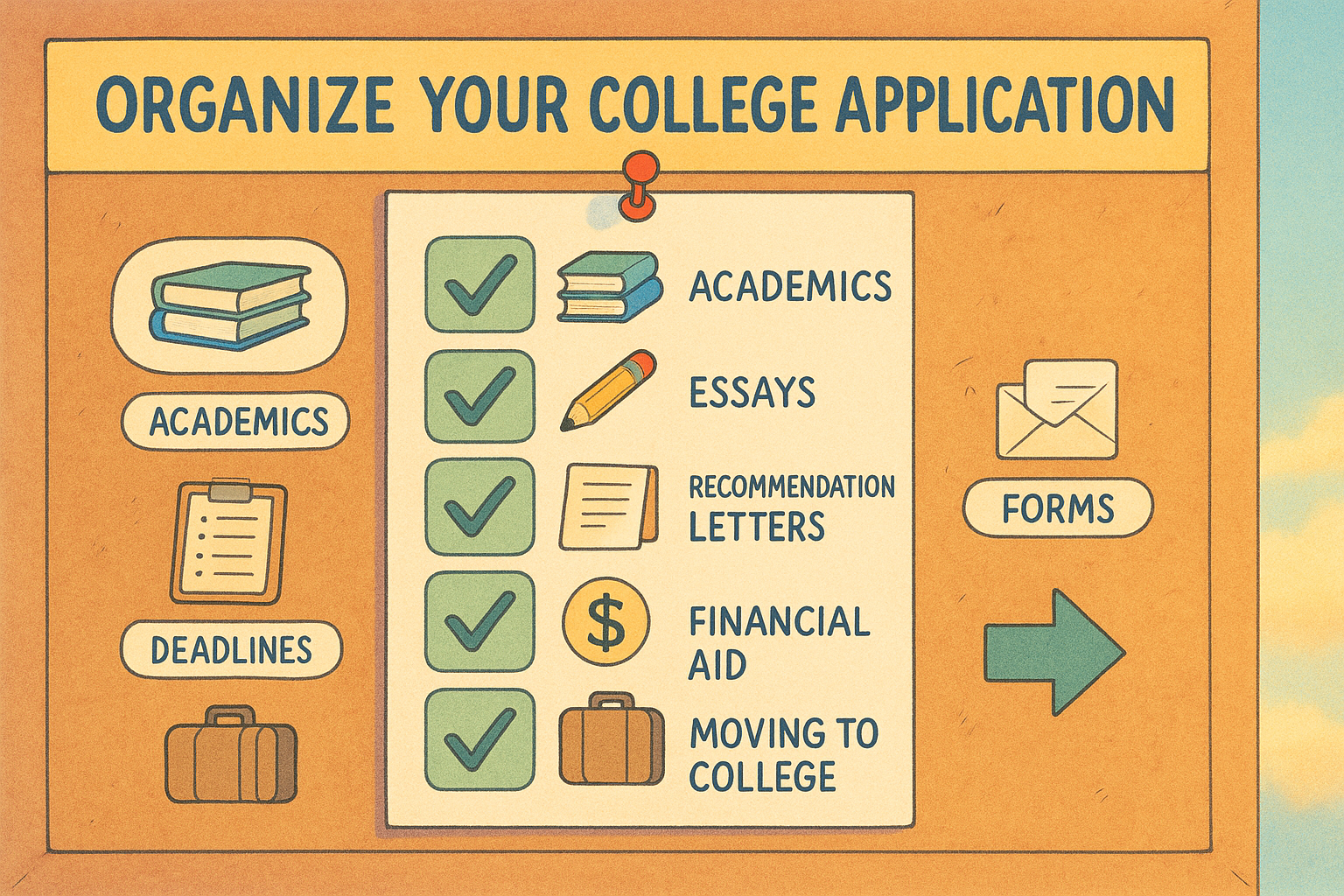
Use this comprehensive college application checklist to make sure you're covering all your bases:
For academic preparation, take challenging courses throughout high school, prepare for and take standardized tests like the SAT or ACT, and maintain strong grades, especially during junior and senior year. Want additional checklist resources? Explore our college application checklist and expert tips.
When it comes to application components, you'll need to complete the Common Application or other application platforms, write and revise personal statements and supplemental essays, request and confirm submission of recommendation letters, send official test scores to colleges, submit high school transcripts, and complete interviews if offered or required. To see top Common App essay prompts and tips, check out our expert guide to Common App essay prompts.
For financial aid, submit the FAFSA and CSS Profile by their deadlines, apply for institutional and external scholarships, compare financial aid packages, and understand loan terms if you're considering student loans.
Final steps include submitting your enrollment deposit to your chosen school, completing housing applications, registering for orientation, sending final transcripts, and completing health forms and other required documentation.
Breaking down the process into these manageable chunks makes the whole journey feel less overwhelming. And checking items off your list provides a satisfying sense of progress!