Table of Contents
- Understanding the College Admissions Timeline A Year by Year Breakdown
- Types of College Application Deadlines Explained
- Creating Your Personal College Application Timeline
- Strategies for Meeting College Application Deadlines
- Common Pitfalls and How to Avoid Them
- Special Considerations for Different Types of Applicants
- Financial Aid and Scholarship Deadlines
- How to Stay Organized During the Application Process
- Conclusion Mastering Your College Application Timeline
Understanding the College Admissions Timeline A Year by Year Breakdown
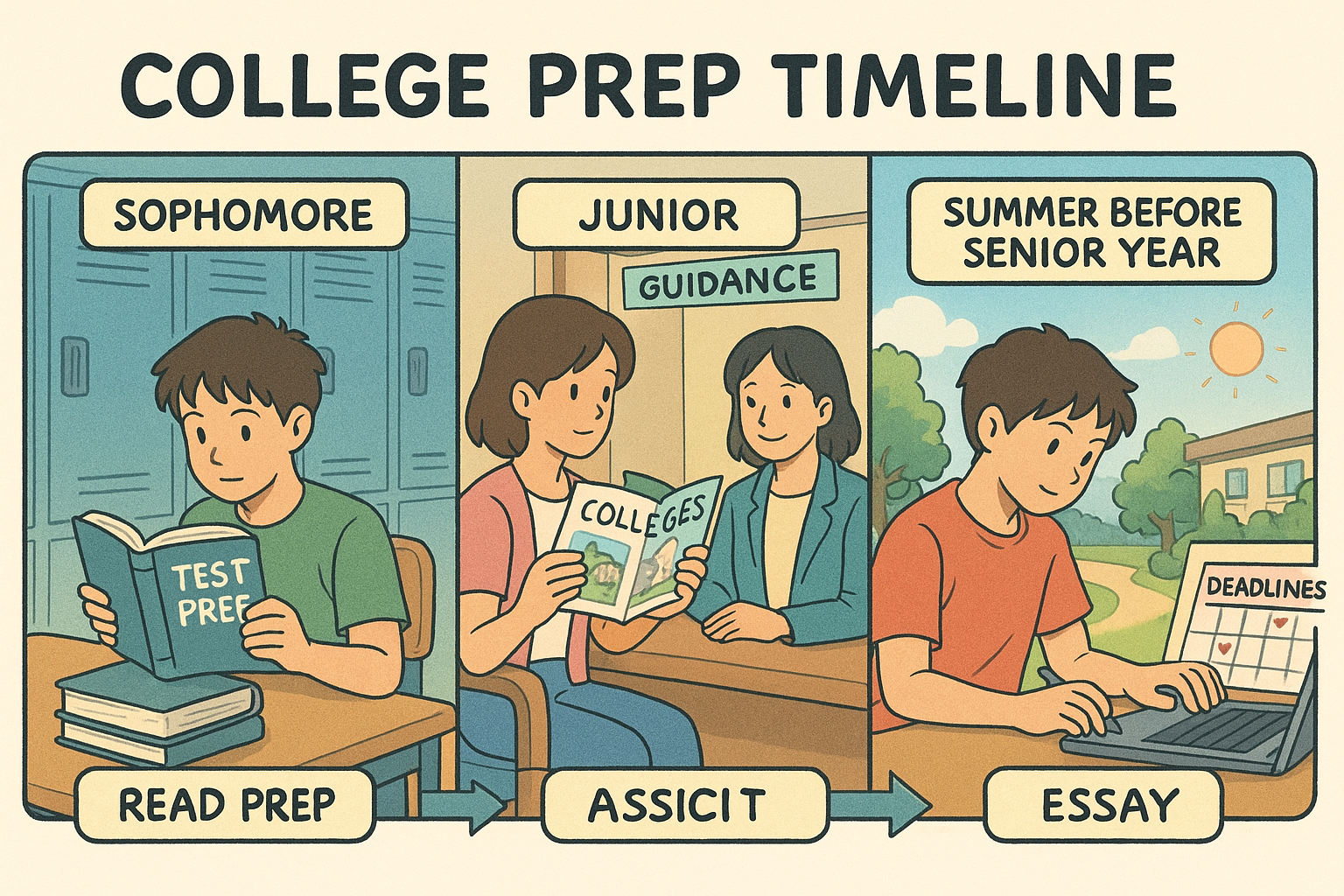
The journey to college begins long before senior year. Let's explore the essential steps and college application deadlines you need to know at each stage of your high school career.
Freshman & Sophomore Years Building Your Foundation
While formal college application deadlines may seem distant, these early years are crucial for setting yourself up for success.
During freshman year, you'll want to focus on establishing strong study habits and maintaining good grades. It's also a great time to explore extracurricular activities that genuinely interest you. You might not realize it, but you're already laying groundwork that will make meeting future college application deadlines much less stressful.
As a sophomore, continue building that strong academic record and consider taking the PSAT for practice. This is also when you should start researching potential college majors and attending college fairs to get a feel for different institutions. Begin developing relationships with teachers who might write recommendation letters for you later.
According to MyFuture's college planning resources, students who begin exploring options early have more time to develop their interests and create stronger applications.
For those seeking a detailed, step-by-step breakdown of the admissions process from freshman to senior year, see our College Application Timeline Guide for a Successful Admissions Journey.
Junior Year The Critical Period
Junior year marks the transition from general college awareness to active preparation. The college admissions timeline intensifies as you begin taking standardized tests and researching schools more seriously.
In fall semester, you'll take the PSAT/NMSQT (which can qualify you for National Merit Scholarships), begin researching colleges more intensively, and meet with your guidance counselor to ensure you're on track with required courses. You should also plan your standardized testing schedule for the SAT or ACT.
By spring semester, it's time to take the SAT or ACT (and consider taking them again if needed). Use spring break to visit college campuses if possible. Start drafting your personal statement and create a preliminary list of colleges you plan to apply to. This is also when you should begin researching scholarship opportunities and requesting letters of recommendation from teachers.
According to Central Michigan University's application timeline guide, junior year is when students should begin narrowing their college choices and understanding the specific requirements for each institution they're considering.
If you want additional insights on how to maximize every step of your timeline, check out our guide on Mastering the College Admissions Timeline and Secure Your Place at Top Schools.
Senior Year Application Season
Senior year is when you'll face actual college application deadlines. Understanding the different types of deadlines becomes crucial for strategic planning.
During the summer before senior year, finalize your college list, including reach, match, and safety schools. Work on application essays, prepare for any remaining standardized tests, and create a calendar of application deadlines for each school.
In fall semester, you'll submit applications for early decision deadlines and early action deadlines (typically November 1-15). Complete the FAFSA (available October 1) and finalize and submit applications for regular decision deadlines (typically January 1-15). Don't forget to continue researching and applying for scholarships throughout this period.
By spring semester, you'll be reviewing acceptance letters and financial aid packages. Make campus visits to help with final decisions and submit your enrollment deposit by National College Decision Day (May 1). Then complete housing applications and orientation registration to prepare for your college journey.
The Niche Blog emphasizes that creating a detailed calendar with all relevant college application deadlines is essential for staying organized during this hectic period.
For a master list of what to do each month of your senior year, see Your College Application Timeline Guide to Planning and Success.
Types of College Application Deadlines Explained
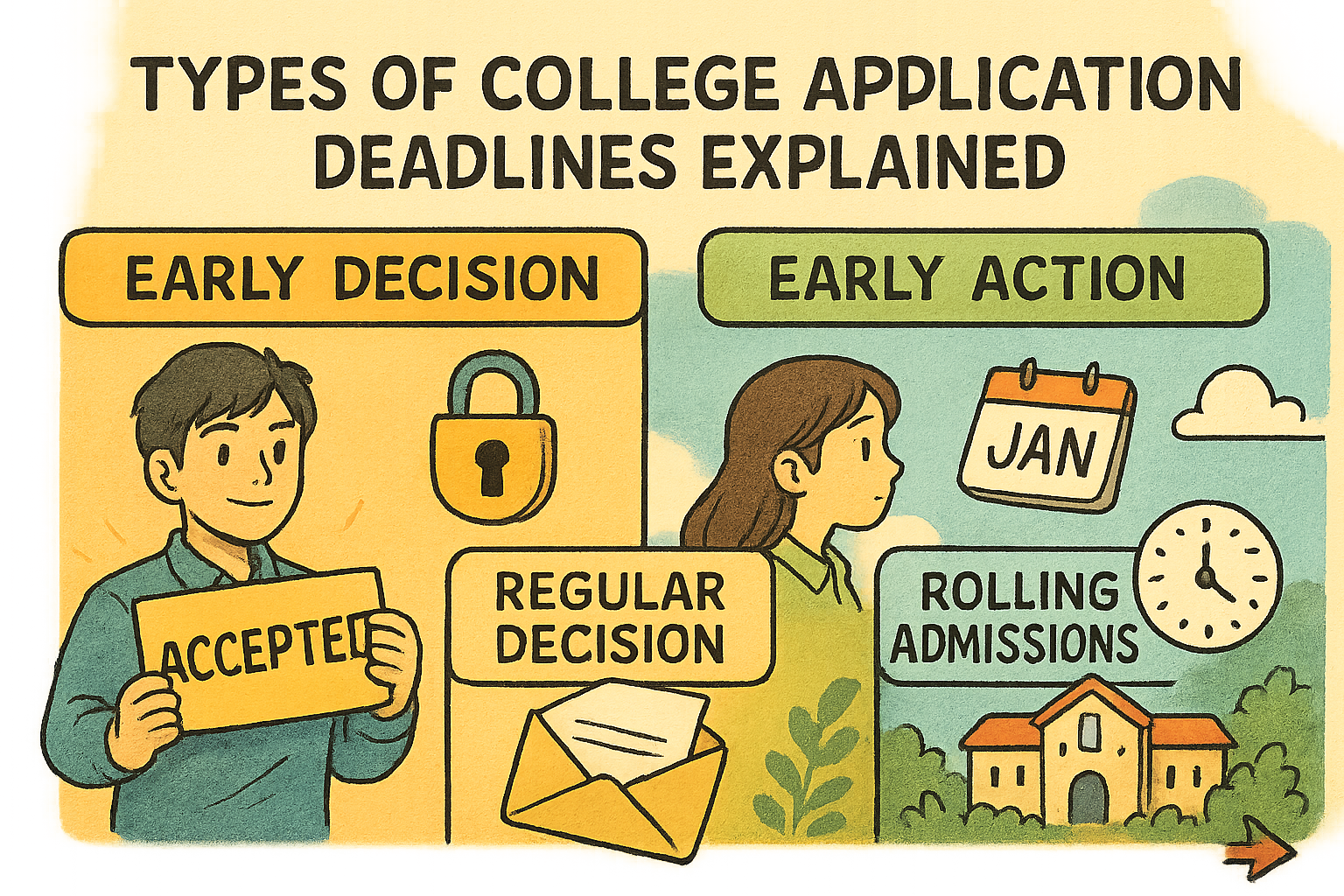
Understanding the different types of application deadlines is crucial for developing an effective college planning strategy. Each option has distinct advantages, restrictions, and implications for your decision-making process.
Early Decision Deadlines The Binding Commitment
Early decision deadlines typically fall in early November, with decisions released in December. This option is binding, meaning if you're accepted, you must attend that institution.
Early Decision has several key characteristics worth considering. It's a binding commitment to attend if accepted, with higher acceptance rates compared to regular decision (often 10-12% higher). You'll receive earlier notification of acceptance (usually mid-December), but you're restricted to applying ED to only one school. You may receive your financial aid package with acceptance.
Early decision deadlines are ideal for students who have a clear first-choice school and are confident they can afford to attend regardless of the financial aid package offered. However, this option limits your ability to compare financial aid offers from multiple institutions.
According to PrepScholar's analysis of application timelines, early decision applicants often see higher acceptance rates, but should only pursue this option if they're absolutely certain about their top choice.
For students strategizing around early options, our Get Into Ivy League With Proven Strategies And Expert Guidance article dives into how early decision may affect your chances—especially at selective schools.
Early Action Deadlines The Flexible Early Option
Early action deadlines also typically fall in November, but unlike early decision, this option is non-binding. You'll receive an early response without being obligated to attend.
The key characteristics of Early Action include a non-binding decision, earlier notification (usually by January), ability to compare financial aid packages from multiple schools, freedom to apply to multiple EA schools (in most cases), and more time to make your final decision.
Some institutions offer "Restrictive Early Action" or "Single-Choice Early Action," which prohibits applying early to other private institutions but remains non-binding for the final decision.
Early action deadlines provide many of the benefits of early decision without the commitment, making them an excellent option for students who want to demonstrate interest in a school while keeping their options open.
Regular Decision Deadlines The Standard Approach
Regular decision deadlines typically fall between January 1 and February 1, with decisions released in late March or early April.
The key characteristics of Regular Decision include a non-binding decision, later application deadline, more time to improve grades and test scores, ability to compare all financial aid offers, and final decision required by May 1 (National College Decision Day).
This traditional application process gives you more time to prepare your applications and improve your academic profile through the first semester of senior year. However, you'll have less time to make your final decision once acceptances arrive.
Boston Magazine's college decision timeline notes that regular decision applicants should use the fall semester of senior year to finalize and polish their applications, ensuring they present their strongest case to admissions committees.
If you want a holistic guide to all types of deadlines and how they fit in the admissions process, see College Application Guide For Successful University Admissions.
Rolling Admissions The Flexible Timeline
Schools with rolling admissions evaluate applications as they arrive rather than waiting for a specific deadline. They typically accept applications from September through spring, sometimes until classes are filled.
The key characteristics of Rolling Admissions include applications reviewed as they're received, decisions typically sent 4-8 weeks after submission, higher acceptance rates for early applicants, opportunity to apply later in the cycle, and non-binding decision.
Rolling admissions offers flexibility but rewards early applicants, who often face less competition. As the academic year progresses, fewer spots remain available, potentially decreasing your chances of acceptance.
For in-depth strategies on navigating rolling admissions, read our Rolling Admission Guide For College Applications And Acceptance Strategies and discover additional rolling admissions benefits and strategies to boost your college application success.
Creating Your Personal College Application Timeline
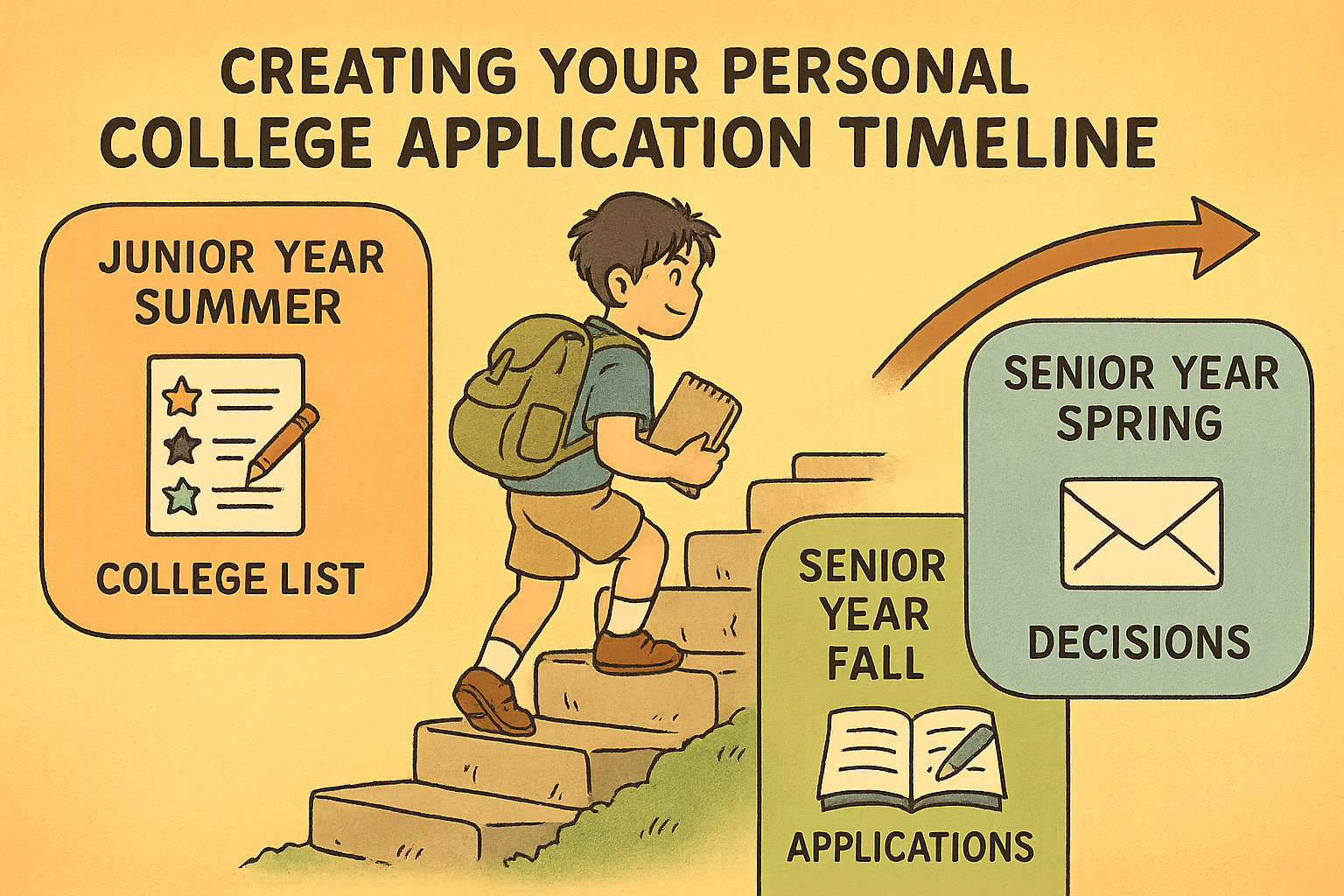
Now that you understand the various college application deadlines, it's time to create a personalized timeline that aligns with your goals and circumstances.
Junior Year Summer The Preparation Phase
During June and July, you should finalize your college list (12-15 schools maximum) and categorize schools by reach, match, and safety. Research specific requirements for each institution and create a master spreadsheet of deadlines and requirements. This is also the time to begin drafting your personal statement and prepare for any remaining standardized tests.
By August, you'll want to finalize your testing schedule for fall, begin working on supplemental essays, research scholarship opportunities, plan campus visits for fall, and gather information for your applications including transcripts and test scores.
Looking for advice on your personal statement? See our guide on How to Write a Successful College Essay That Stands Out for strategies and inspiration.
Senior Year Fall The Application Phase
In September, finalize your personal statement and begin submitting applications to schools with rolling admissions. Request official test scores be sent to your schools and complete the CSS Profile for schools that require it (available October 1). Don't forget to request letters of recommendation, giving recommenders at least 3 weeks notice.
October is when you'll submit your FAFSA (available October 1), finalize applications for early decision deadlines and early action deadlines, continue working on regular decision applications, and apply for scholarships with fall deadlines.
By November, you should submit applications for early decision deadlines and early action deadlines (typically November 1-15), continue working on regular decision applications, follow up on recommendation letters and transcript requests, and apply for scholarships with winter deadlines.
In December, you'll receive early decision/action results, finalize and submit applications for regular decision deadlines, complete any remaining standardized tests, and keep track of all application components to ensure completeness.
Senior Year Spring The Decision Phase
January is when you'll submit applications for remaining regular decision deadlines (typically January 1-15), complete additional scholarship applications, and submit mid-year grade reports if required.
During February and March, follow up with colleges to ensure your application is complete, continue applying for scholarships, prepare for potential interviews, and research housing options at your top-choice schools.
For a complete timeline with tips on staying organized, see College Application Timeline Guide for a Successful Admissions Journey.
By April, you'll receive regular decision results, compare financial aid packages, attend admitted student events, and make final campus visits to help with decisions.
In May, make your final decision and submit enrollment deposit (typically by May 1), notify other schools of your decision, complete housing applications, register for orientation, and send final transcript to your chosen school.
According to MyFuture's college planning resources, maintaining a detailed calendar with all relevant deadlines is essential for navigating the complex college admissions timeline successfully.
Strategies for Meeting College Application Deadlines
Meeting college application deadlines requires more than just awareness—it demands effective time management and organizational skills. Here are strategies to help you stay on track:
Create a Visual Timeline
Use a large wall calendar, digital calendar, or specialized app to mark all deadlines. Color-code deadlines by type (application, financial aid, scholarships) and set reminders 2-4 weeks before each deadline. Don't forget to include buffer time for unexpected delays.
Break Down the Application Process
Divide each application into manageable components and set personal deadlines earlier than official ones. Allocate specific time blocks for working on applications and prioritize schools by deadline and preference.
For more hands-on college planning steps and expert advice on the application process, check our Master the College Application Process for Admissions Success.
Manage Recommendation Letters Strategically
Request recommendations at least one month before they're needed and provide recommenders with a resume and personal statement. Send gentle reminders two weeks before the deadline and express gratitude regardless of the outcome.
Prepare Application Components in Advance
Gather and organize required documents early (transcripts, test scores, etc.) and create a master personal statement that can be adapted for different schools. Prepare a resume highlighting your achievements and activities and complete standardized testing well before application season.
The Niche Blog suggests creating application "bundles" for schools with similar requirements to streamline the process and reduce redundant work.
To dive deeper into essential steps for each application, including essays and recommendations, visit our College Application Timeline Guide.
Common Pitfalls and How to Avoid Them
Even with careful planning, students often encounter challenges when navigating college application deadlines. Here are common pitfalls and strategies to avoid them:
- Procrastination
The Problem: Waiting until the last minute to complete applications, leading to rushed work and potential technical issues.
The Solution: Set personal deadlines 1-2 weeks before official deadlines. Break the application process into smaller, manageable tasks. Use the "2-minute rule"—if a task takes less than two minutes, do it immediately. Find an accountability partner like a parent, counselor, or friend who can help keep you on track. - Misunderstanding Deadline Requirements
The Problem: Confusing "received by" versus "postmarked by" deadlines or misinterpreting time zones.
The Solution: Carefully read all deadline information and assume all deadlines are in the institution's local time zone. For "received by" deadlines, submit at least 3-5 days early. Save confirmation emails and screenshots of submissions as proof. - Overlooking Supplemental Requirements
The Problem: Focusing on the main application while neglecting program-specific essays, portfolios, or audition requirements.
The Solution: Create a comprehensive checklist for each school and research department-specific requirements beyond the general application. Contact admissions offices when requirements seem unclear and review your application status portal regularly.
To see how to handle confusion around supplemental and Common App essays, visit Common App Essay Prompts Expert Guide For Powerful College Applications for tips on essay requirements and prompts.
- Technical Difficulties
The Problem: Encountering website crashes, payment issues, or submission errors close to deadlines.
The Solution: Never wait until the final day to submit applications. Test all payment methods in advance and save copies of all application components offline. Know the technical support contact information for each application platform.
PrepScholar emphasizes that technical difficulties are common on deadline days as servers become overwhelmed with last-minute submissions, making early submission crucial.
Special Considerations for Different Types of Applicants
The college application process varies depending on your circumstances. Here are special considerations for different types of applicants:
International Students
International students face additional requirements and often earlier college application deadlines. You'll need to allow extra time for document translation and verification and research country-specific requirements for credential evaluation. Plan for English proficiency tests (TOEFL, IELTS) well in advance and consider visa processing timelines when planning. Be aware that some financial aid options may have earlier deadlines for international applicants.
For a month-by-month guide catered to global applicants, see our College Application Timeline for International Students Essential Steps and Deadlines.
Transfer Students
Transfer applicants typically face different college application deadlines than first-year students. Deadlines often fall later (February-June for fall admission) and course equivalency evaluations may take additional time. Your current college transcripts must be up-to-date, and some schools offer rolling admission specifically for transfers. Housing applications may have separate deadlines for transfer students.
For those considering a transfer, read Transfer Application Success Guide For Undergraduate And Graduate Admissions for detailed transfer strategies, deadlines, and requirements.
Gap Year Students
If you're taking a gap year, you have two main options: apply during senior year and request a deferral after acceptance, or wait and apply during your gap year.
Each approach has implications for college application deadlines and financial aid. Research each institution's deferral policy before making your decision.
Student Athletes
Student athletes navigating NCAA recruitment face additional timeline considerations. Register with the NCAA Eligibility Center during junior year and understand how recruitment periods align with application deadlines. Communicate with coaches about application timing and be aware that athletic scholarships may have different deadlines. Consider early application options to secure spots on teams.
Boston Magazine's college decision timeline notes that student athletes should begin communicating with college coaches as early as sophomore year to understand how recruitment timelines interact with standard application deadlines.
Financial Aid and Scholarship Deadlines
Understanding financial aid deadlines is just as crucial as knowing college application deadlines. Missing these deadlines can significantly impact your ability to afford college.
FAFSA Timeline
The Free Application for Federal Student Aid (FAFSA) becomes available on October 1 each year. Submit as close to October 1 as possible for maximum aid consideration and be aware of both federal and state FAFSA deadlines. Some schools have priority deadlines for FAFSA submission. Gather tax information and financial documents in September and make corrections or updates as needed throughout the year.
CSS Profile Timeline
Some private colleges require the CSS Profile in addition to the FAFSA. It's available October 1, like the FAFSA, but often has earlier deadlines. The CSS Profile requires more detailed financial information and may have application fees (fee waivers available). Check each school's specific CSS Profile deadline.
For a step-by-step overview of the CSS Profile process, visit our CSS Profile Application Guide To Maximize Financial Aid Success.
Institutional Aid Deadlines
Many colleges have their own financial aid applications with separate deadlines. These are often earlier than regular admission deadlines and may require additional documentation. They could be tied to specific scholarship consideration and might have different deadlines for early vs. regular applicants.
Scholarship Application Strategies
External scholarships have varying deadlines throughout the year. Create a separate scholarship application calendar and prioritize applications by deadline and award amount. Repurpose and adapt essays when possible and apply year-round, not just during application season. Consider local scholarships, which often have less competition.
According to Central Michigan University's application timeline guide, students should begin researching scholarship opportunities during junior year and continue applying throughout senior year and even during college.
If you're an international student, check out Css Profile For International Students Everything You Need To Know.
How to Stay Organized During the Application Process
Managing multiple college application deadlines requires exceptional organization. Here are effective systems to keep you on track:
Digital Organization Systems
Use specialized college application platforms like Naviance or College Board's BigFuture. Create a dedicated email address for college communications and utilize project management tools like Trello or Asana. Set up cloud storage for application documents and use password management tools for multiple application portals.
Physical Organization Methods
Maintain a dedicated college application binder with dividers for each school. Create a wall calendar or whiteboard displaying all deadlines and use colored folders for different application components. Keep a physical checklist for each application and store copies of all submitted materials.
Communication Management
Keep a log of all communications with colleges and save confirmation emails in a dedicated folder. Record the names and contact information of admissions representatives and document all phone conversations with notes and dates. Set up email filters to organize college communications.
Application Tracking Spreadsheet
Create a comprehensive spreadsheet including school name and application platform, application deadlines (early and regular), required components (essays, recommendations, interviews), submission status and confirmation numbers, financial aid deadlines and submission status, estimated costs and potential aid, and decision release dates.
The Niche Blog recommends creating a master tracking document that includes not just deadlines but also login information for various application portals (stored securely) and notes from campus visits or virtual information sessions.
For more tips, see College Application Timeline Guide for a Successful Admissions Journey.
Conclusion Mastering Your College Application Timeline
Navigating college application deadlines successfully requires careful planning, organization, and attention to detail. By understanding the different types of deadlines and creating a personalized timeline, you can approach the application process with confidence rather than stress.
Remember these key takeaways:
- Start early—junior year is not too soon to begin serious preparation.
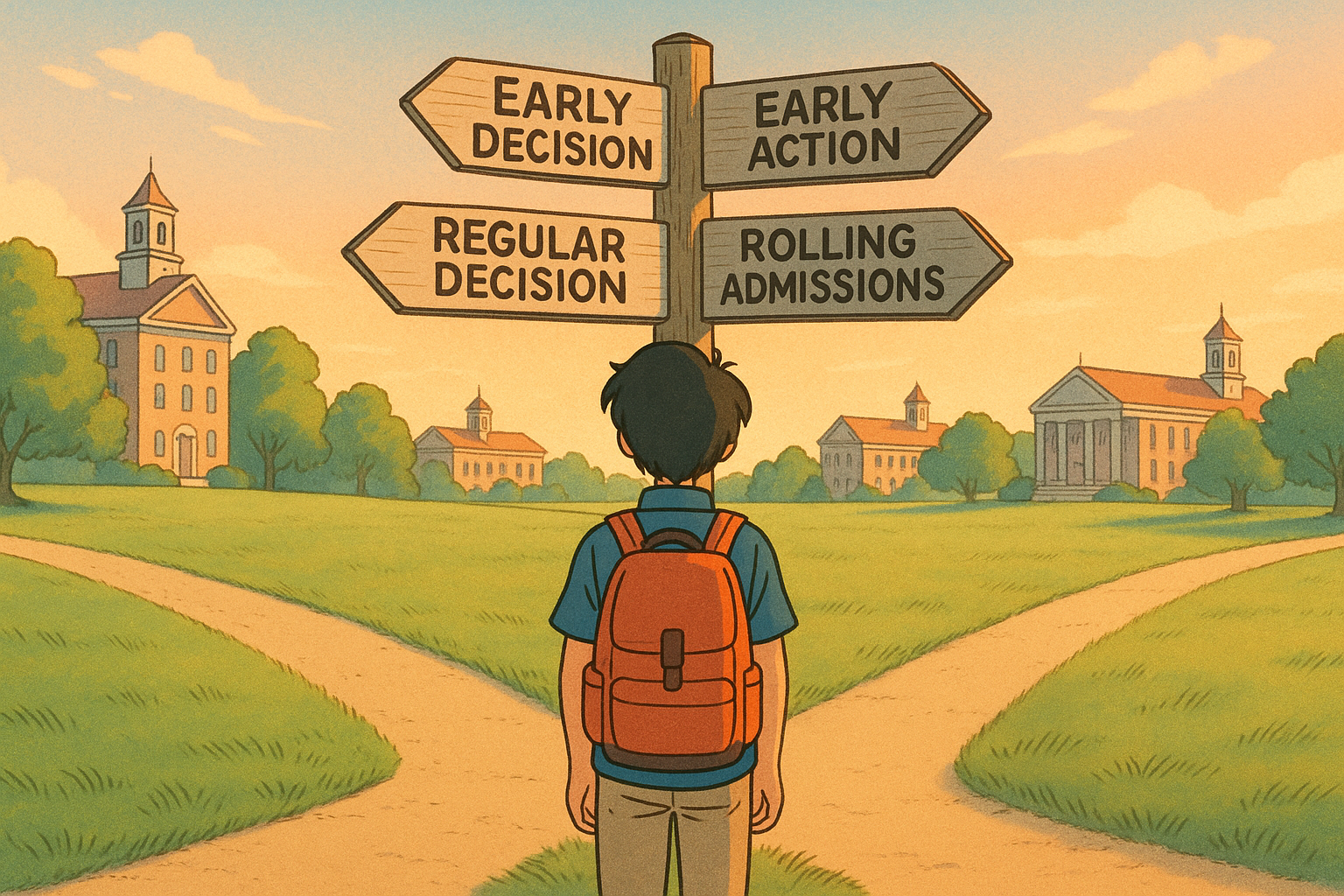
- Understand the differences between early decision, early action, regular decision, and rolling admissions.
- Create and maintain a detailed tracking system for all deadlines and requirements.
- Submit applications well before deadlines to avoid technical difficulties.
- Pay equal attention to financial aid deadlines, which often differ from application deadlines.
- Develop contingency plans in case unexpected challenges arise.
The college application process may seem overwhelming, but breaking it down into manageable steps makes it achievable. By following the guidance in this comprehensive timeline, you'll be well-positioned to submit strong applications that showcase your potential to your chosen institutions.
For a more in-depth examination of the overall college application process, read Master the College Application Process for Admissions Success.
Your college journey begins not with acceptance letters but with understanding and meeting these crucial college application deadlines. With proper planning and execution, you'll navigate this complex process successfully and open doors to your future educational opportunities.