
Table of Contents
Phase 1 Early Preparation
The foundation of your law school journey begins well before you submit any applications. This early preparation phase, ideally starting 18-12 months before enrollment, sets the stage for everything that follows.
Researching Accelerated JD Programs and Law Schools

Your law school journey starts with thorough research, and you'll want to kick this off about 18-16 months before you plan to enroll. This isn't just casual browsing—it's strategic reconnaissance that'll shape your entire application strategy.
Start by creating a detailed spreadsheet of potential schools. You know what's really helpful? Including columns for application requirements, deadlines, and those all-important admission statistics like median LSAT scores and GPAs. Pay special attention to schools offering accelerated JD programs if you're looking to fast-track your legal career. These two-year options are gaining serious traction—applications to these programs have jumped by nearly 25% since 2020!
Don't just look at rankings. Dig deeper into bar passage rates, employment outcomes, and scholarship opportunities. These factors often tell you more about a school's value than its position on some list. And try to attend virtual or in-person law school fairs—there's nothing like connecting directly with admissions reps to get the inside scoop.
The University of Michigan Law School suggests starting this research phase at least 18 months before your intended enrollment. That might seem excessive, but trust me, you'll appreciate having the extra time to craft targeted applications for each school on your list.
https://michigan.law.umich.edu/resource-center/jd-application-checklist-and-timeline
For a step-by-step summary of the essential law school application timeline and tips on researching your best program options, don't miss our Law School Application Timeline 2025 guide.
Developing Your LSAT Preparation Schedule
Let's be real about the LSAT—it's the heavyweight champion of law school admission factors. For those on an accelerated timeline, early and intensive prep isn't optional; it's absolutely necessary.
Start by taking a diagnostic test to see where you stand. This baseline score will help you develop a realistic study plan. Whether you choose a structured prep course or go the self-study route, plan to dedicate 15-20 hours weekly to LSAT preparation. That might sound intense, but successful applicants typically spend 3-4 months in focused preparation, with many top performers starting a full year ahead.
For 2025 admission, aim to take the LSAT in June or August 2024. This timing gives you a huge advantage—you'll have your scores ready when application portals open, putting you at the front of the line. And if your score isn't quite where you want it, you'll still have time for a retake without delaying your applications.
I've seen countless students underestimate LSAT prep time and scramble at the last minute. Don't be one of them! Northwestern University's Pre-Law Advising Office recommends at least 3-4 months of dedicated study before your test date, and I'd say that's the bare minimum for competitive scores.
https://www.northwestern.edu/careers/grad-law-schools/applying-to-law-school/law-school-application-timeline.html
For additional details on how to build your LSAT study plan within the full law school application process, see our detailed advice in Law School Application Timeline 2025 Essential Steps for a Successful Admission Process.
Building Relationships for Letters of Recommendation
Strong recommendation letters can make your application shine, but they don't materialize overnight. You need to start cultivating these relationships 15-12 months before enrollment—especially on an accelerated timeline.
Begin by identifying 3-4 potential recommenders who truly know your academic abilities or professional skills. These shouldn't just be people with impressive titles; they should be individuals who can speak specifically about your potential for law school success.
Schedule face-to-face meetings (or video calls) to discuss your law school plans. Come prepared with your resume and maybe even a draft of your personal statement. These materials give your recommenders context and specific points to highlight. And please, give them plenty of time—at least 6-8 weeks—to craft thoughtful letters.
For 2025 admission, try to finalize your recommendation requests by early summer 2024. This gives your recommenders breathing room before the fall application rush hits. Remember to follow up respectfully and always express genuine gratitude for their support.
The University of Oregon's Pre-Law Advising Center offers a great tip: your best recommendations often come from professors who taught you in smaller, upper-division courses. These instructors have seen your critical thinking and writing abilities up close—exactly what law schools want to know about.
https://prelaw.uoregon.edu/law-school-application-timeline/
Wondering how to secure the best letters and manage all supporting documents? Check out our law school application timeline with key recommendation and transcript tips.
Phase 2 Application Preparation
With your foundation established, the next phase focuses on preparing the core components of your application package. This critical period, occurring 12-6 months before enrollment, will determine the strength of your candidacy.
Taking the LSAT and Evaluating Your Score
The LSAT represents your big moment of truth on this accelerated timeline. For 2025 admission, you should take the test no later than October 2024, though I strongly recommend aiming for June or August if possible.
Register for your preferred test date well in advance—at least 2-3 months ahead. Testing centers fill up quickly, especially for popular dates. Keep up with your practice tests right until exam day, focusing particularly on timed, full-length tests that build your mental endurance.
After receiving your score, take a clear-eyed look at how you stack up against the median scores at your target schools. With applications trending upward, LSAT scores have become even more crucial. For competitive programs in the 2025 cycle, scoring 3-5 points above a school's median could significantly boost your chances, especially for those coveted accelerated JD spots.
If your score falls short of your goals, you'll face a tough decision: retake the test or adjust your school list. Remember that many schools now focus on your highest score, but some may still consider all attempts. Either way, don't panic—make a strategic decision based on application timelines and your personal circumstances.
Harvard Law School advises having your final LSAT score by December for optimal consideration, though earlier is always better, especially if you're eyeing early decision or priority review options.
https://hls.harvard.edu/admissions/timeline-for-the-2025-application-cycle/
For more LSAT preparation benchmarks and what competitive scores look like for top law schools in 2025, see our in-depth resource: Law School Application Timeline 2025.
Crafting Your Personal Statement and Supplemental Essays
Your personal statement is where you transform from a set of numbers into a compelling candidate. This is especially true for accelerated programs, where admissions committees need to see that you can thrive in an intensive environment.
Start drafting early—like, really early. The best personal statements evolve through multiple revisions over several months. Begin by identifying a central theme that showcases your unique qualities and motivations for pursuing law. Maybe it's a pivotal experience that shaped your perspective or a long-standing passion for a specific area of law. Whatever your angle, make it authentic and memorable.
For accelerated programs, be sure to address why you're specifically interested in this intensive path. Admissions committees want to know you've thought carefully about the demands and benefits of completing law school in two years instead of three.
Keep your statement concise—typically 2-3 pages double-spaced is the sweet spot. And don't go it alone! Seek feedback from multiple readers, including pre-law advisors if they're available to you.
For supplemental essays, pay close attention to each school's specific prompts. "Why this law school" essays should demonstrate genuine research beyond what's on their website. Diversity statements should highlight your unique perspective and what you'll contribute to the class.
For 2025 admission, aim to have solid drafts completed by August 2024. Syracuse University's Pre-Law Advising notes that compelling statements often go through 8-10 drafts before submission—so give yourself plenty of runway.
https://artsandsciences.syracuse.edu/student-success/pre-law-advising/law-school-application-timeline/
Need more guidance for this critical part of your package? Explore proven strategies and law school essay tips in our law school application guide.
Additionally, if you’re looking for inspiration and structure, check out a broad range of personal statement examples for university and masters success.
Finalizing Letters of Recommendation and Transcripts
As you approach the submission phase, getting your supporting documents in order becomes critical. For the 2025 cycle, aim to have all recommendations and transcripts submitted to LSAC by September 2024.
For recommendation letters, now's the time to follow up with anyone who hasn't confirmed completion. A gentle reminder about approaching deadlines is perfectly acceptable—professors and employers understand these timelines matter. Make sure your recommenders know how to submit through the LSAC Letter of Recommendation Service, and always have a backup recommender in mind just in case.
For transcripts, request official copies from every undergraduate and graduate institution you've attended, even if you just took a single summer course there. LSAC needs to see everything. Allow 4-6 weeks for processing through their Credential Assembly Service—delays happen more often than you'd think, especially during peak application seasons.
Once your transcripts are processed, carefully review your Academic Summary Report for accuracy. This is how law schools will see your academic record, so any discrepancies need to be addressed immediately.
The University of Michigan Law School emphasizes the importance of submitting transcripts early, noting that processing delays can seriously impact your timeline, especially if you're applying to multiple schools. I've seen students miss early decision deadlines because of transcript issues, so don't leave this to the last minute!
https://michigan.law.umich.edu/resource-center/jd-application-checklist-and-timeline
Get key reminders and a recommended schedule for transcripts and recommendations in our Law School Application Timeline 2025 resource.
Phase 3 Application Submission and FollowUp
With your application materials prepared, you now enter the submission and follow-up phase. This period, occurring 6-3 months before enrollment, requires strategic timing and careful attention to deadlines and financial considerations.
Meeting Law School Application Deadlines
Understanding and hitting application deadlines can make or break your law school chances, especially on an accelerated timeline. For 2025 admission, most application portals will open in September 2024, but deadlines vary widely by school and program type.
Create a detailed calendar with every deadline for each school on your list. Pay special attention to early decision and early action cutoffs, which typically fall in November or early December. For schools with rolling admissions (and that's most of them), submitting early gives you a significant advantage as more seats are available.
Aim to submit at least 1-2 weeks before stated deadlines. This buffer protects you from last-minute technical glitches or verification issues with LSAC. I've seen too many students panic when the system slows down on deadline day!
For accelerated JD programs, which often have limited seats, applying as early as possible within the application window is particularly crucial. Some two-year programs have separate, earlier deadlines than the traditional JD program at the same school, so double-check these details carefully.
Recent trends show about 60% of law school applications are submitted before December, with early applicants generally receiving more favorable consideration. For 2025, try to submit everything by mid-November 2024 for optimal positioning.
Harvard Law School's timeline indicates that applications submitted by December receive the most comprehensive review, with later applications potentially facing stiffer competition for fewer remaining seats.
https://hls.harvard.edu/admissions/timeline-for-the-2025-application-cycle/
For a thorough breakdown of key application and interview deadlines for law school—including accelerated and traditional programs—visit our law school application timeline 2025 guide and our in-depth overview of law school application deadlines you need to know.
Navigating the Law School Admissions Process
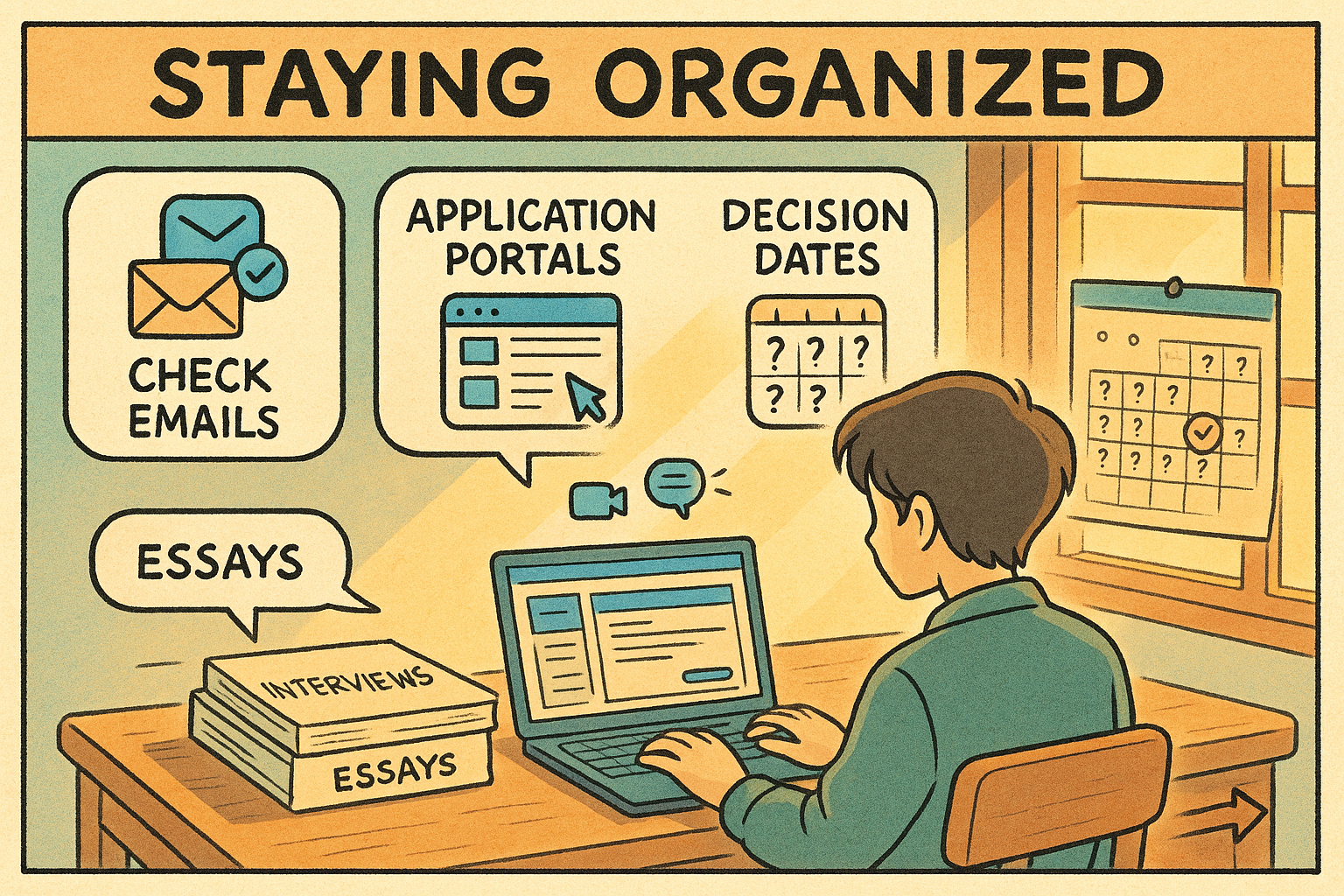
After hitting submit, you enter the waiting game—a phase that requires patience and strategic follow-up. During this period, schools are reviewing applications and beginning to make admission decisions.
Check your application status portals regularly, but not obsessively. Most schools will email you when there's an update, but some still rely on status checkers. If a school requests additional information or materials, respond promptly—these requests often mean your application is receiving active consideration.
For accelerated programs, be prepared for potential interviews or additional writing assessments. These extra steps help schools evaluate your readiness for an intensive curriculum. Practice articulating why you're specifically interested in and suited for an accelerated JD program.
During the 2025 cycle, expect most schools to begin releasing decisions about 4-8 weeks after submission, though timelines vary significantly. Early decision applicants typically hear back within 4-6 weeks of the application deadline, while regular decision can stretch much longer.
While waiting, continue to demonstrate appropriate interest through campus visits or virtual events if possible. Just don't overdo it—admissions officers appreciate enthusiasm but are wary of excessive contact.
Northwestern University's Pre-Law Advising Office notes that applicants should prepare for a potentially lengthy review process. Some decisions might not arrive until March or April 2025, even for applications submitted in fall 2024. This waiting period can be stressful, but try to use the time productively by researching financial aid options and preparing for the next steps.
https://www.northwestern.edu/careers/grad-law-schools/applying-to-law-school/law-school-application-timeline.html
For a comprehensive view of how law school admissions offices operate, including insights into the review process and post-submission strategy, see our dedicated guide: Law School Application Timeline 2025.
You may also find it helpful to learn about how other highly-selective admissions offices work by visiting College Admissions Office Insights for Navigating the Application Process.
Applying for Financial Aid for Law School
Let's talk money—because law school is a major investment. For the 2025 cycle, your financial aid journey begins October 1, 2024, when the FAFSA becomes available. Submit this form as soon as possible, even if you haven't received admission decisions yet.
Beyond the FAFSA, many law schools have their own financial aid forms and processes. Create a separate tracking system for these school-specific requirements and deadlines. Some schools offer substantial merit scholarships that require no additional application, while others have competitive scholarship programs with separate applications and deadlines.
Don't overlook external scholarships! Organizations like the American Bar Association, state bar associations, and various affinity groups offer law school scholarships with winter and spring deadlines. These external funds can significantly reduce your debt burden.
For those considering accelerated JD programs, note that while you'll pay for one fewer year of tuition, the compressed schedule often limits opportunities for paid work during your studies. This makes scholarship and grant funding particularly important for your financial planning.
About 75% of law students receive some form of financial aid, with merit-based scholarships increasingly used by schools to attract top candidates. To position yourself competitively, ensure all financial aid applications are completed by January 2025.
The University of Oregon's Pre-Law Advising Center emphasizes that some scholarship funds are allocated on a first-come, first-served basis, making early FAFSA submission particularly advantageous. I've seen students receive significantly better packages simply because they applied for aid earlier than their peers with similar credentials.
https://prelaw.uoregon.edu/law-school-application-timeline/
For a holistic approach to financial aid and options for affording law school, view tips and deadlines in our law school application timeline resource.
Phase 4 DecisionMaking and Preparation
The final phase of your accelerated law school application journey involves evaluating offers, making your decision, and preparing for the transition to law school. This crucial period occurs 3-0 months before enrollment.
Evaluating Admission Offers and Making Your Decision
As admission decisions roll in between January and April 2025, you'll face perhaps the most important choice of your legal education journey. This isn't just about picking a school—it's about choosing the environment where you'll develop as a legal professional.
Start by creating a comparison spreadsheet that goes beyond rankings. Include factors like financial aid packages, total cost of attendance, bar passage rates, employment outcomes, location, and specialization opportunities. For accelerated programs versus traditional three-year options, carefully weigh the benefits of earlier entry into the profession against the more intensive academic experience.
Before making your final decision, try to attend admitted student events. These gatherings—whether virtual or in-person—offer invaluable insights into school culture that you simply can't get from websites or brochures. Talk to current students, especially those in programs you're considering, about their experiences.
Don't be afraid to negotiate scholarship offers, particularly if you've received competitive packages from peer institutions. Many schools have some flexibility in their financial aid, but they can't adjust what they don't know about. A polite email explaining your situation and expressing genuine interest in their program can sometimes yield thousands in additional scholarship funds.
Most schools require a deposit to secure your spot, typically due in April or May. Before making this commitment, make sure you've thoroughly evaluated all your options. This deposit is essentially your first investment in your legal education.
Syracuse University advises admitted students to carefully compare financial aid packages, noting that scholarship negotiations are not only possible but often successful when approached professionally.
https://artsandsciences.syracuse.edu/student-success/pre-law-advising/law-school-application-timeline/
For a complete review of how to evaluate outcomes, offers, and next steps as you approach law school, see our related insights in Law School Application Timeline 2025.
Preparing for Law School Success
Once you've made your decision, the final months before enrollment should focus on preparing for the academic, financial, and personal transition to law school. For Fall 2025 enrollment, these preparations will happen during summer 2025.
First, secure housing near campus as early as possible. Law school housing markets can be competitive, especially in urban areas. Living close to campus saves valuable commuting time and makes it easier to access library resources and study groups.
Next, tackle any pre-orientation readings or assignments your school provides. These materials are designed to give you a head start on legal terminology and concepts. Don't brush them off—they're your first opportunity to build a foundation for success.
Develop a detailed financial plan and budget for your law school years. Be realistic about living expenses and create a system for tracking spending. Many students find that financial stress can significantly impact academic performance if not properly managed.
For accelerated program students, this preparation phase is absolutely critical given the intensive nature of the curriculum. Reach out to current students in these programs to learn about effective time management and study strategies. Their insights can help you hit the ground running.
Recent surveys show that students who engage in deliberate preparation before enrollment report smoother transitions and less first-semester stress. Many successful students recommend reading introductory legal texts and practicing case briefing before orientation begins.
The University of Michigan Law School emphasizes developing strong time management systems before arrival. This skill becomes your secret weapon, particularly during that demanding first year when the workload can feel overwhelming.
https://michigan.law.umich.edu/resource-center/jd-application-checklist-and-timeline
Want to maximize your first-year success? Start with our step-by-step law school application and pre-enrollment success guide.
Special Considerations for Accelerated JD Programs
Accelerated JD programs offer a unique pathway to legal education that deserves special attention in your application strategy. These programs have distinct advantages and challenges that impact both the application process and your law school experience.
Benefits and Challenges of Two Year Law Degree Programs
Accelerated JD programs have been gaining serious traction, with applications jumping about 30% over the past five years. And it's not hard to see why—these programs offer some compelling advantages for the right students.
The most obvious benefit is time savings. You'll enter the legal profession a full year earlier than your peers in traditional programs, which means you start earning that lawyer salary sooner. This translates to reduced total tuition costs and a faster return on your educational investment. Many employers also view accelerated program graduates favorably, seeing your completion of such an intensive program as evidence of work ethic and efficiency.
But let's be real about the challenges too. These programs are intense—you're essentially compressing three years of legal education into two years. This means heavier course loads, fewer breaks, and potentially higher stress levels. You'll have limited time for extracurricular activities like law review or moot court, which can be important resume builders. Summer internships—traditionally a key pathway to post-graduation employment—may be replaced with required coursework.
The structure of these programs varies significantly. Some compress three years into two calendar years by requiring summer study, while others achieve acceleration through heavier course loads during traditional terms. Before applying, thoroughly research how each program structures its curriculum.
Harvard Law School notes that while accelerated programs can be excellent options, applicants should realistically assess their learning style and stress management capabilities. These programs aren't for everyone—they work best for self-directed learners with strong organizational skills and clear career goals.
https://hls.harvard.edu/admissions/timeline-for-the-2025-application-cycle/
Explore more about accelerated and two-year JD timelines in our law school application timeline for 2025.
Tailoring Your Application for Accelerated Programs
Applying to accelerated JD programs requires a strategic approach that demonstrates your readiness for an intensive educational experience. These programs are looking for candidates who not only have strong academic credentials but also possess the time management skills and resilience necessary for success in a compressed curriculum.
In your personal statement, directly address why you're choosing an accelerated path. Connect your previous experiences to the demands of these programs. Have you thrived in intensive academic environments before? Managed multiple responsibilities successfully? These are the stories admissions committees want to hear.
Your recommenders should specifically speak to your ability to handle pressure and maintain performance under tight deadlines. Brief them on the nature of accelerated programs so they can highlight relevant qualities in their letters.
For the 2025 cycle, competition for these programs will be fierce, with acceptance rates typically 5-10% lower than traditional programs at the same schools. Strong LSAT scores are particularly important as predictors of your ability to handle the rigorous curriculum.
If you're invited to interview, prepare to discuss concrete examples of how you've managed high-pressure situations in the past. Admissions committees want to see that you've thought realistically about the challenges and have strategies to maintain both academic performance and personal well-being.
Northwestern University, which offers a prominent accelerated JD program, advises applicants to clearly articulate how their professional experience and personal attributes have prepared them for compressed legal education. They're looking for maturity and self-awareness in addition to academic potential.
https://www.northwestern.edu/careers/grad-law-schools/applying-to-law-school/law-school-application-timeline.html
Deepen your application strategy for these specialized programs in our step-by-step timeline and tips for accelerated law school applicants.
Conclusion Your Roadmap to Law School Success in 2025
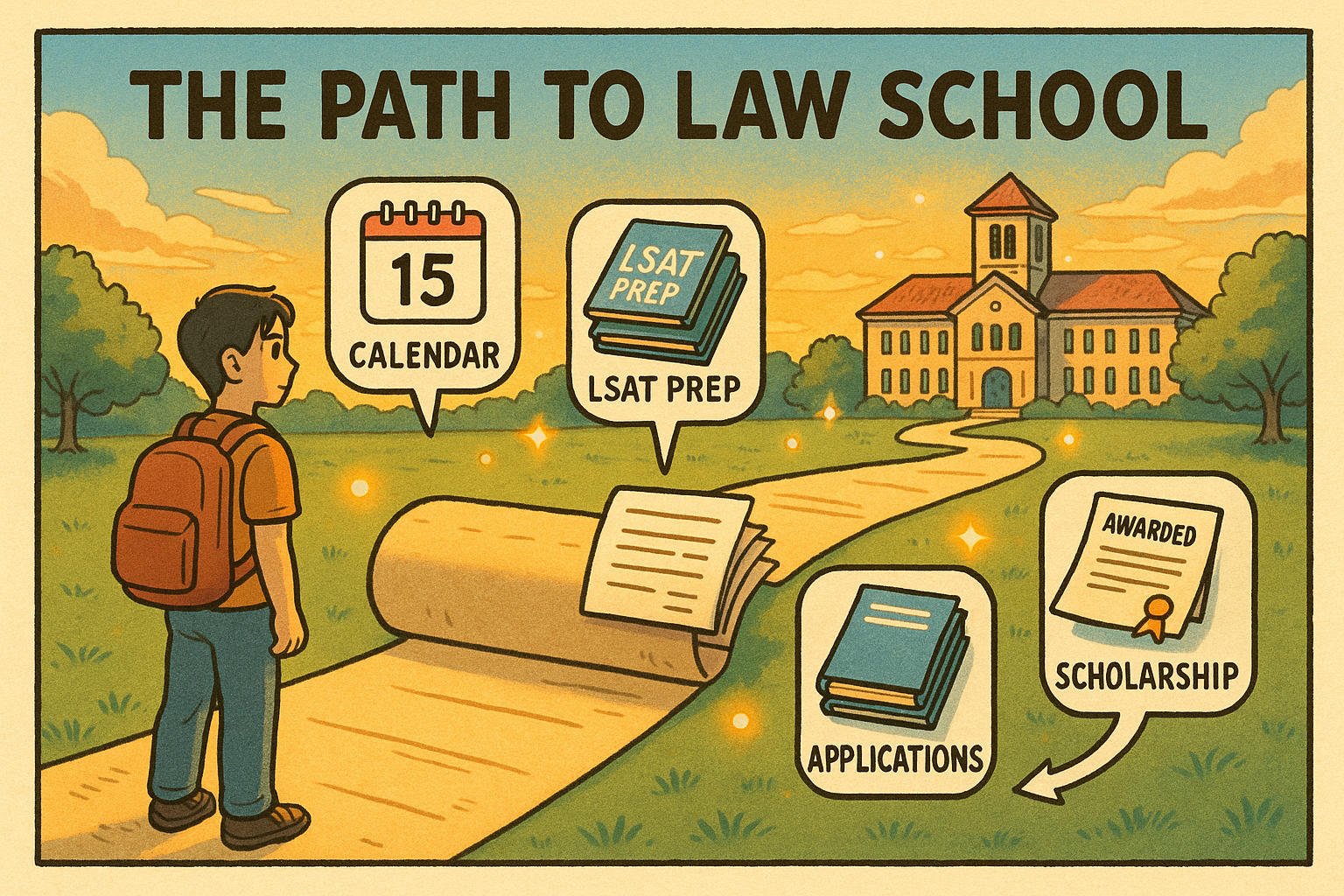
The journey to law school for 2025 admission requires careful planning, strategic preparation, and disciplined execution. By following this comprehensive timeline, you'll position yourself for success in an increasingly competitive landscape.
Start early—the most successful applicants begin preparation 12-18 months before they plan to enroll. This gives you ample time to prepare thoroughly for the LSAT, research schools that truly fit your goals, and craft application materials that showcase your unique strengths.
Prioritize LSAT preparation as the cornerstone of your application strategy. While law schools consider multiple factors, your LSAT score remains the single most influential element of your application. Give yourself enough time to prepare properly and potentially retake if needed.
If you're considering accelerated programs, craft application materials that specifically address your interest in and suitability for these intensive options. Schools want to see that you understand what you're signing up for and have the skills to thrive in a compressed curriculum.
Submit your applications as early as possible within each school's window. With rolling admissions at most schools, earlier applicants often have an advantage in both admission and scholarship consideration.
When decision time comes, carefully evaluate financial considerations alongside academic and career factors. The lowest-cost option isn't always the best value, and the highest-ranked school isn't always the right fit for your specific goals.
The path to law school is demanding, but with proper planning and preparation, you can navigate it successfully. Your investment in thorough preparation now will pay dividends throughout your legal education and career.
For those pursuing 2025 admission, the time to begin is now. Use this timeline as your roadmap, adjusting as needed for your specific circumstances. With dedication and strategic planning, you'll be well-positioned to join the next generation of legal professionals.
Ready for deeper specifics? Review our full Law School Application Timeline 2025 with all the essential steps, deadlines, and pro tips, and consult our comprehensive guide to law school application deadlines.